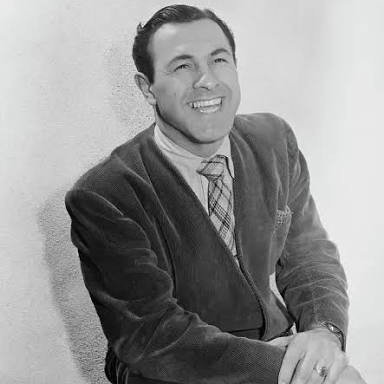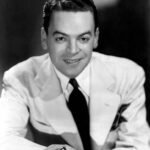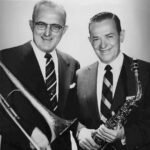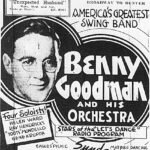
Few orchestra leaders represented the changing face of postwar American big band music more dramatically than Stan Kenton. While many of his contemporaries remained rooted in traditional swing, Kenton continually pushed his orchestra toward larger, more adventurous musical concepts that blended jazz, classical influences, Latin rhythms, and progressive orchestration. His appearances at Denver’s Elitch Gardens Trocadero Ballroom brought one of the nation’s most innovative and talked-about orchestras to one of America’s premier ballroom venues, helping cement the Troc’s reputation as a destination for the biggest names in American music. The Troc was regarded by touring musicians as an important stop between the Midwest and the West Coast, and Kenton became one of the distinguished bandleaders who regularly included Denver on his touring schedule.
Born Stanley Newcomb Kenton in Wichita, Kansas, in 1911 and raised primarily in California, Kenton formed his first successful orchestra in 1941. Almost immediately, he distinguished himself from other swing bandleaders through powerful brass sections, complex arrangements, and a willingness to experiment. While audiences could certainly dance to many of his early recordings, Kenton increasingly viewed his orchestra as a concert ensemble rather than simply a dance band. His slogan, “Artistry in Rhythm,” reflected his belief that jazz could become a sophisticated American art form. Throughout the 1940s, hits such as Eager Beaver, Intermission Riff, and Tampico made the orchestra nationally famous while introducing listeners to a bold, orchestral sound unlike anything heard from most dance bands.
By the late 1940s and early 1950s—the same period when Kenton appeared at the Trocadero—his orchestra was entering its most ambitious phase. His famous Innovations in Modern Music Orchestra expanded the traditional big band by adding strings, French horns, and additional woodwinds, creating a 39-piece ensemble that blurred the line between jazz orchestra and symphony orchestra. Although this project proved financially difficult, it demonstrated Kenton’s relentless desire to expand the possibilities of jazz composition and orchestration. His Denver audiences at the Trocadero experienced an orchestra that represented the cutting edge of American popular music, even as ballroom dancing remained central to the venue’s identity.
Kenton’s orchestra also became a training ground for many of the greatest jazz musicians and arrangers of the twentieth century. Players including Maynard Ferguson, Art Pepper, Shelly Manne, Lee Konitz, Charlie Mariano, Bud Shank, and many others either gained national attention or further developed their careers under his leadership. Equally important were arrangers such as Pete Rugolo, Bill Russo, Shorty Rogers, Gerry Mulligan, and Bill Holman, whose innovative writing helped redefine modern jazz orchestration. Kenton’s influence extended far beyond his own recordings through his educational clinics, published arrangements, and support of school and collegiate jazz programs. His commitment to music education created a lasting legacy that continues to shape jazz performance today.
Today, Stan Kenton is remembered not only as one of the great big band leaders but also as one of jazz’s most fearless innovators. His performances at the Elitch Gardens Trocadero Ballroom placed Denver audiences in direct contact with one of the most progressive orchestras of the Swing Era and postwar jazz period. Alongside appearances by Benny Goodman, Gene Krupa, the Dorsey Brothers, Guy Lombardo, and Lawrence Welk, Kenton’s engagements helped establish the Trocadero as one of the nation’s premier ballroom destinations, where both traditional dance music and the future of jazz could be heard on the same stage.
Seasons at the Trocadero
- While surviving promotional material confirms that Stan Kenton was among the nationally recognized orchestra leaders who regularly appeared at the Elitch Gardens Trocadero Ballroom, comprehensive surviving booking records for every engagement have not been preserved. Historic Elitch Theatre archives, contemporary accounts, and Denver newspaper references consistently identify Kenton as one of the Trocadero’s featured headliners during the late 1940s and early 1950s, when the ballroom was at the height of its national prominence.
Musical Achievements
- Founded one of the most influential progressive jazz orchestras in American music.
- Created the distinctive “Artistry in Rhythm” style that combined jazz, classical, and Latin influences.
- Led the groundbreaking Innovations in Modern Music Orchestra, one of the largest and most ambitious jazz ensembles ever assembled.
- Recorded numerous jazz classics, including Eager Beaver, Intermission Riff, Tampico, Artistry in Rhythm, and Peanut Vendor.
- Helped launch or significantly advance the careers of Maynard Ferguson, Art Pepper, Shelly Manne, Lee Konitz, Charlie Mariano, Bud Shank, and many other prominent jazz musicians.
- Became one of the twentieth century’s leading advocates for jazz education through clinics, educational recordings, and published arrangements.
Awards and Honors
- Won two Grammy Awards, including Best Jazz Performance – Large Group.
- Received numerous additional Grammy nominations throughout his career.
- Inducted into the DownBeat Hall of Fame.
- Honored by the National Association of Jazz Educators for his contributions to music education.
- Continues to be recognized through the Stan Kenton Research Center and educational programs preserving his music and legacy.
Legacy
Stan Kenton transformed the role of the American big band from a dance orchestra into a vehicle for artistic exploration. His innovative orchestration, fearless experimentation, and commitment to expanding jazz’s musical vocabulary influenced generations of composers, arrangers, and performers. His educational clinics and published music helped establish jazz education programs across the United States, while his orchestra served as a proving ground for dozens of future jazz legends. His appearances at Denver’s Elitch Gardens Trocadero Ballroom connected Colorado audiences with one of the most progressive musical forces of the twentieth century and reinforced the ballroom’s reputation as one of America’s finest venues for nationally touring orchestras.
Wikipedia Link: