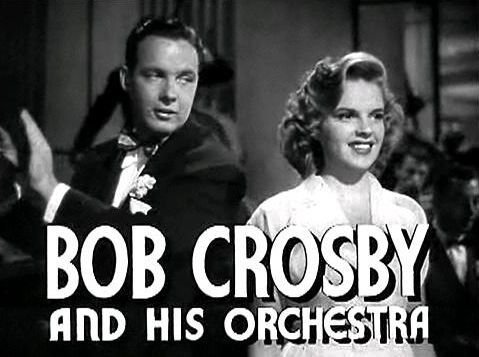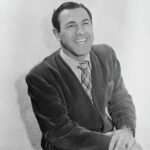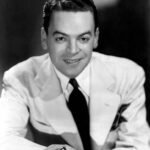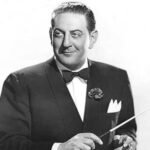
Bob Crosby was one of the defining bandleaders of the swing era, a genial entertainer whose name became synonymous with a distinctive blend of big-band swing and traditional Dixieland jazz. Born George Robert Crosby in Spokane, Washington, in 1913, he was the younger brother of superstar Bing Crosby, but Bob developed a substantial career of his own.
After singing with Anson Weeks and the Dorsey Brothers Orchestra, Crosby was chosen in 1935 to front a cooperative band assembled largely from former members of Ben Pollack’s orchestra. Although saxophonist Gil Rodin served as the group’s musical director and Crosby himself was primarily its vocalist, frontman, and master of ceremonies, his easygoing personality and showmanship proved an ideal match for an exceptionally talented group of musicians. The Bob Crosby Orchestra—and its celebrated smaller ensemble, the Bob Cats—became especially important for keeping the exuberant sound of Dixieland jazz alive during the height of the swing era.
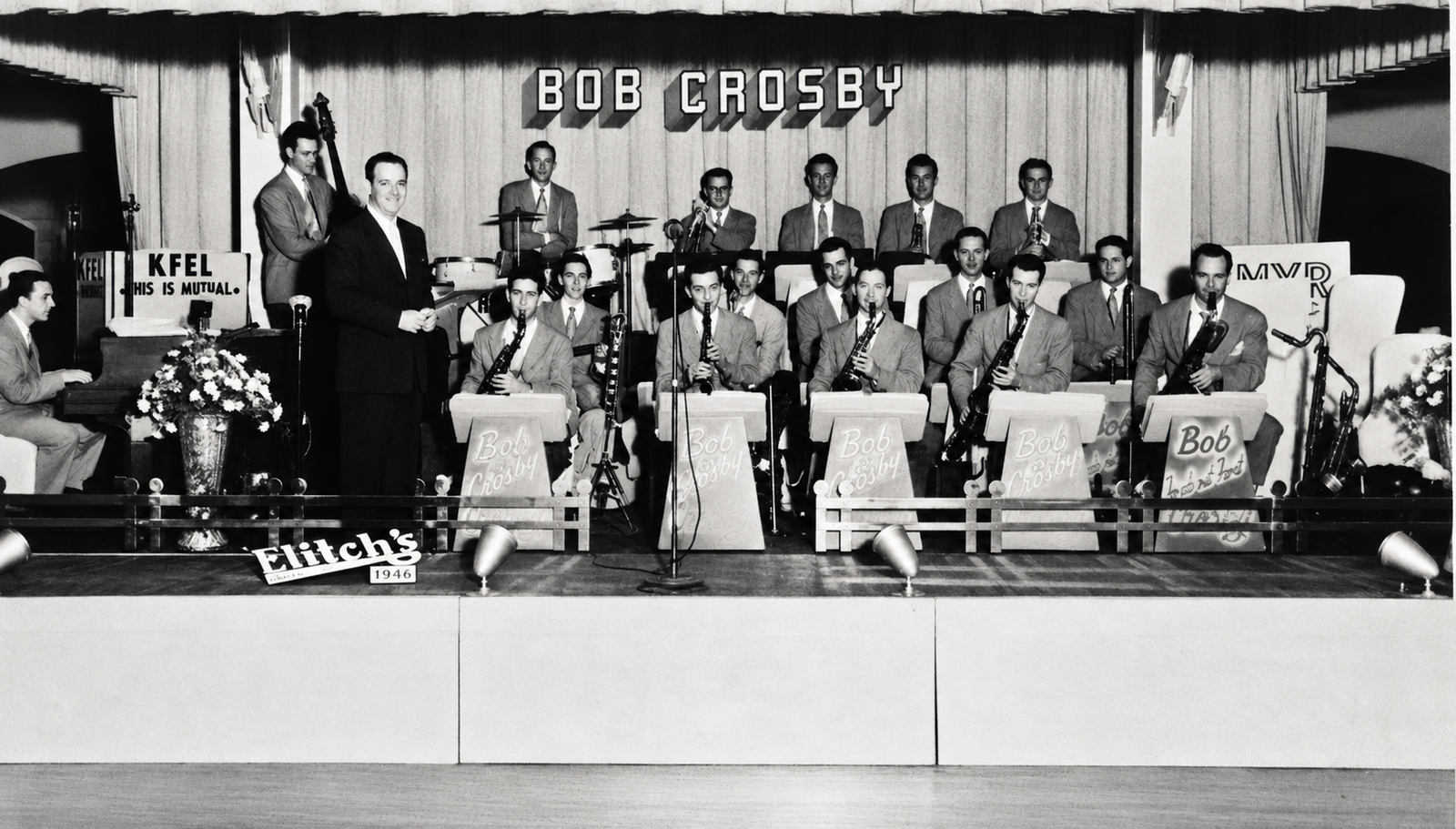
Crosby’s connection to Elitch Gardens places him squarely within the golden age of Denver’s legendary Trocadero Ballroom, long remembered as the “summer home of the big band sound.” The Bob Crosby Orchestra appeared at the Trocadero in 1946, when Denver dancers were still flocking to Elitch’s to hear nationally famous orchestras. An August 1946 issue of Billboard reported that Elitch Gardens had been keeping Denver dancers busy with a program that included one-night stands by Sammy Kaye, Bob Crosby, and Orrin Tucker. The engagement brought to the Trocadero a bandleader whose name was already nationally familiar through records, radio, films, and appearances across the country. Crosby’s orchestra was a particularly fitting attraction for the Troc: its repertoire combined polished dance-band entertainment with the infectious jazz associated with such classics as “South Rampart Street Parade” and “The Big Noise from Winnetka.”
Remarkably, Crosby returned to the Trocadero nearly three decades later. On June 14, 1975, the Bob Crosby Orchestra again performed at Elitch Gardens, during what would prove to be the ballroom’s final summer. The Trocadero closed later that season and was demolished in September 1975, making Crosby one of the notable big-band figures who connected the ballroom’s glory years with its final chapter. His own career demonstrated similar longevity. Following World War II service in the U.S. Marine Corps, Crosby remained active in radio, television, films, recordings, and Bob Cats reunions for decades. He hosted The Bob Crosby Show on television, worked extensively with Jack Benny, and continued performing into the later years of his life. Crosby died in 1993 at age 79, leaving a legacy not merely as Bing Crosby’s younger brother, but as the charismatic leader whose orchestra helped preserve traditional jazz within the big-band era—and as a memorable part of the musical history of Elitch Gardens.
Dates at the Trocadero
1946 — Bob Crosby Orchestra
Bob Crosby and his orchestra performed a one-night stand at the Trocadero Ballroom during the 1946 season. Contemporary reporting in Billboard specifically identified Crosby among the nationally known bands appearing at Elitch Gardens that summer.
June 14, 1975 — Bob Crosby Orchestra
Crosby returned to the Trocadero for another performance on June 14, 1975. This appearance came during the ballroom’s final season; the last dances were held in August, and the famed Trocadero was demolished in September 1975.
Notable Accomplishments, Awards, and Other Work
- Leader of the Bob Crosby Orchestra and Bob Cats: Beginning in 1935, Crosby fronted one of the most highly regarded jazz-oriented big bands of the swing era. The smaller Bob Cats ensemble, organized from members of the orchestra in 1937, became especially influential in the revival of traditional New Orleans-style jazz and Dixieland.
- Major recordings: Crosby’s orchestra recorded an extensive catalog for Decca and other labels. Among the recordings most closely associated with Crosby and his musicians are “South Rampart Street Parade,” “The Big Noise from Winnetka,” “March of the Bob Cats,” “Little Rock Getaway,” “Honky Tonk Train Blues,” “What’s New?,” “Muskrat Ramble,” and “Royal Garden Blues.”
- Chart successes: The Bob Crosby Orchestra scored major popular hits including “In a Little Gypsy Tea Room” (1935), “Whispers in the Dark” (1937), “Day In, Day Out” (1939), and “Down Argentina Way” (1940). “Whispers in the Dark” became one of the orchestra’s biggest successes, while “Day In, Day Out” also reached the top of the U.S. charts.
- “South Rampart Street Parade”: Introduced by the Bob Crosby Orchestra in a November 1937 recording session, this Bob Haggart composition became one of the band’s signature pieces and an enduring Dixieland and traditional-jazz standard.
- “The Big Noise from Winnetka”: Created by bassist Bob Haggart and drummer Ray Bauduc and recorded by the Crosby organization in 1938, the number became another enduring classic associated with the Bob Crosby band.
- Radio: Crosby became a familiar national radio personality and later served as orchestra leader on The Jack Benny Program, further extending his career beyond the big-band era.
- Television: He hosted The Bob Crosby Show, a daytime television variety program that ran from 1953 to 1957, followed by a brief prime-time version in 1958.
- Hollywood career: Crosby appeared in numerous motion pictures, including Kansas City Kitty (1944), The Singing Sheriff (1944), My Gal Loves Music (1944), Meet Miss Bobby Socks (1944), When You’re Smiling (1950), Two Tickets to Broadway (1951), and The Five Pennies (1959).
- World War II service: During World War II, Crosby served as a commissioned officer in the U.S. Marine Corps, leading bands that entertained American servicemen in the Pacific.
- Hollywood Walk of Fame: Crosby received two stars on the Hollywood Walk of Fame on February 8, 1960—one honoring his work in radio and another for television.
- Musical legacy: The Crosby orchestra provided an important platform for an extraordinary roster of jazz musicians, including Bob Haggart, Ray Bauduc, Yank Lawson, Matty Matlock, Eddie Miller, Billy Butterfield, Joe Sullivan, Bob Zurke, Muggsy Spanier, and others. The Bob Cats’ success helped anticipate and encourage the traditional-jazz revival that flourished during the 1940s.
Wikipedia Link
https://en.wikipedia.org/wiki/Bob_Crosby
Gallery