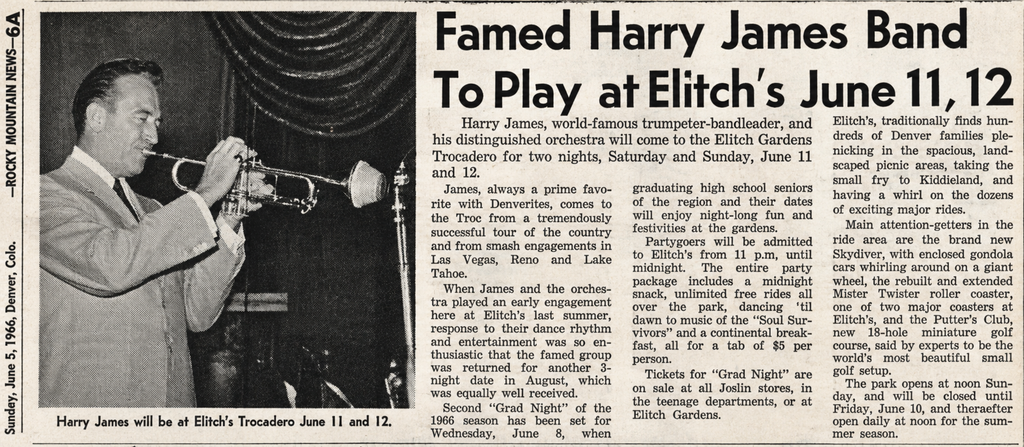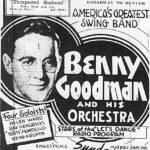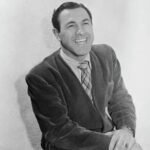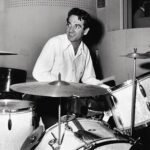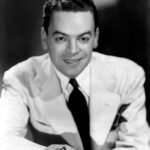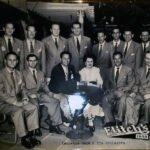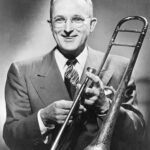
Harry James was one of the most celebrated trumpeters of the big band era, and his orchestra was among the touring headliners that made Elitch Gardens’ Trocadero Ballroom a must-play stop. Born in 1916 in Albany, Georgia, to a circus family, James was performing as a contortionist at age four and playing drums in his father’s circus band by age six. He took up the trumpet at eight, and the strict practice regimen his father imposed gave him the dazzling technique and tone that would define his career. After stints with Ben Pollack and Benny Goodman, James launched his own orchestra in January 1939 with Goodman’s financial backing. He gave a young Frank Sinatra his first high-profile band job that same year.
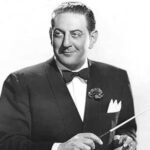
The James orchestra became a national sensation in the early 1940s after it added a string section and shifted toward a sweeter, pop-oriented sound. The 1941 recording of “You Made Me Love You” was a landmark hit, and the band followed it with a long string of chart-toppers while appearing in Hollywood films. For a band of this stature, a summer date at Elitch’s was a natural fit. The Trocadero, opened in 1917 with its 150-foot dance floor, was a favorite stopping point for bands traveling between Kansas City and California. Harry James is remembered alongside Les Brown, Guy Lombardo, Stan Kenton, Gene Krupa, Benny Goodman, the Dorsey brothers, Tex Beneke, and Lawrence Welk as one of the touring orchestras that made “the Troc” a summer destination. Denver dancers, many of them dressed up for a night out, filled the ballroom’s stadium-style seating and open-air dance floor to hear bands like his. Radio brought the music to a much wider audience, since KOA broadcast “An Evening at the Troc” live from the ballroom each summer weekend.
James kept leading his orchestra for more than four decades, with a brief break in 1947, and he played his last professional engagement just days before his death in 1983. His flamboyant, vibrato-rich style, rooted in the circus and the blues, made him a model for younger trumpeters. Some jazz critics dismissed his pop hits as schmaltzy, but later reassessments have been kinder to his bands of the late 1940s and the late 1950s and early 1960s. For the Historic Elitch Theatre, Harry James is a reminder of the golden age when the biggest names in American popular music brought their orchestras to a Denver ballroom, and when “not to see Elitch’s” really was “not to see Denver.”
Seasons at the Trocadero
- 1966
- Harry James and His Orchestra are listed among the touring bands that played the Trocadero Ballroom in its big band era, which ran from the 1930s through the 1950s. The ballroom closed in 1975. Complete season-by-season booking records for the Trocadero have not survived, and the Historic Elitch Theatre is still working to confirm the specific dates of his appearances. If you remember seeing Harry James at the Troc, or have a ticket stub, newspaper ad, photo, or program, please contact us.
Musical Achievements
- Over 200 singles, with nine No. 1 hits and 32 Top Ten hits. His commercial success on the U.S. pop charts was among the strongest of the big band era.
- “You Made Me Love You (I Didn’t Want to Do It)” (1941). This million-seller peaked at No. 5 on Billboard’s best-selling retail records chart and spent ten non-consecutive weeks in the Top Ten. It was later inducted into the Grammy Hall of Fame (2010).
- A string of million-selling records. Besides “You Made Me Love You,” these included “I’ve Heard That Song Before” (1942), “I Had the Craziest Dream,” and “Ciribiribin” (1939), which became his orchestra’s signature theme.
- “Trumpet Blues and Cantabile” in the Grammy Hall of Fame (1999). This honored one of his signature instrumental showpieces.
- First high-profile band to feature Frank Sinatra (1939). His orchestra launched the career of one of the century’s biggest stars and also featured vocalists Helen Forrest and Dick Haymes, with drummer Buddy Rich in his later bands.
- DownBeat readers’ poll wins. He was voted best trumpet instrumentalist in 1937, 1938, and 1939, and favorite soloist in 1942.
- Hollywood films and radio. He appeared with his band in Springtime in the Rockies, Private Buckaroo, Best Foot Forward, Bathing Beauty, and Two Girls and a Sailor. He also succeeded Glenn Miller on the Chesterfield radio program in 1942 and hosted Call for Music in 1948.
- Dubbing the trumpet for Kirk Douglas in Young Man with a Horn (1950). The soundtrack album with Doris Day reached No. 1.
- Lasting recognition and honors. He was selected for the Metronome All-Stars in 1939, 1940, and 1941, received a star on the Hollywood Walk of Fame (1960), and was inducted into the Big Band and Jazz Hall of Fame (1983).
- Celebrity status and enduring cultural legacy. He was married to Betty Grable from 1943 to 1965, and a 1945 U.S. Treasury report listed them as the highest-paid couple in the nation. His music also lives on: “It’s Been a Long, Long Time” (1945) was later featured in Marvel’s Captain America: The Winter Soldier and Avengers: Endgame.
Awards and Honors
- Grammy Hall of Fame: “Trumpet Blues and Cantabile” (inducted 1999) and “You Made Me Love You” (inducted 2010)
- DownBeat readers’ poll: best trumpet instrumentalist in 1937, 1938, and 1939, and favorite soloist in 1942
- Metronome All-Stars: selected in 1939, 1940, and 1941
- Star on the Hollywood Walk of Fame, 6683 Hollywood Boulevard (February 8, 1960)
- Inducted into the Big Band and Jazz Hall of Fame (1983)
Legacy
- Appeared with his band in Hollywood films including Springtime in the Rockies (1942), Private Buckaroo (1942), Best Foot Forward (1943), Bathing Beauty (1944), and Two Girls and a Sailor (1944)
- Dubbed the trumpet playing for Kirk Douglas in Young Man with a Horn (1950), whose soundtrack album with Doris Day reached No. 1
- Succeeded Glenn Miller on the Chesterfield radio program in 1942 and hosted the CBS/NBC series Call for Music in 1948
- Later recording work on Capitol and MGM, including Wild About Harry! (1957), reflecting a Count Basie-inspired swing sound
- Married to Hollywood star Betty Grable from 1943 to 1965. A 1945 U.S. Treasury report listed them as the highest-paid couple in the nation
- A successful thoroughbred racehorse owner whose horses won stakes races in the early 1950s
Wikipedia Link: