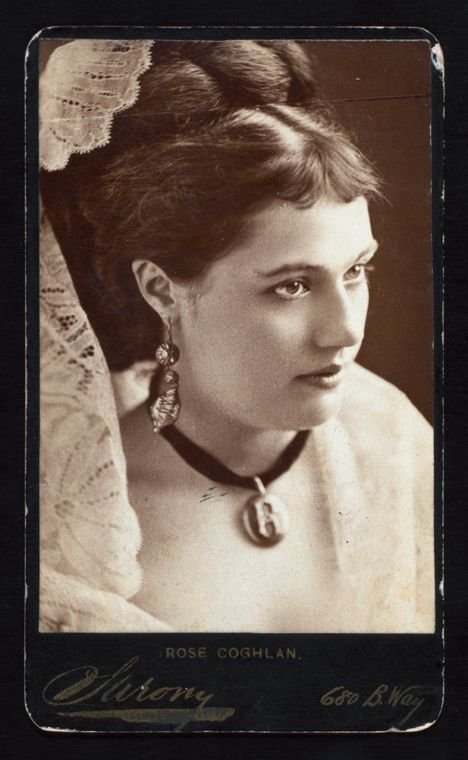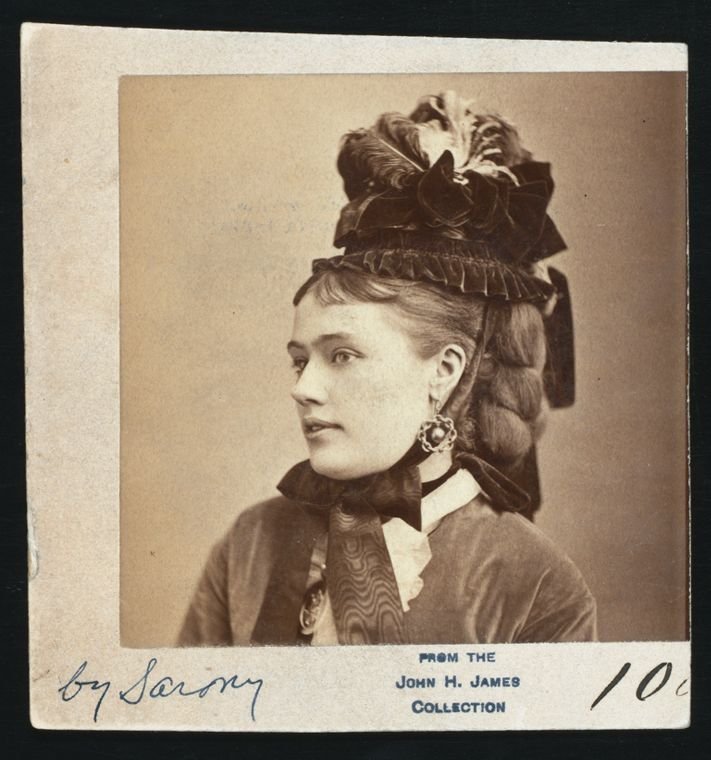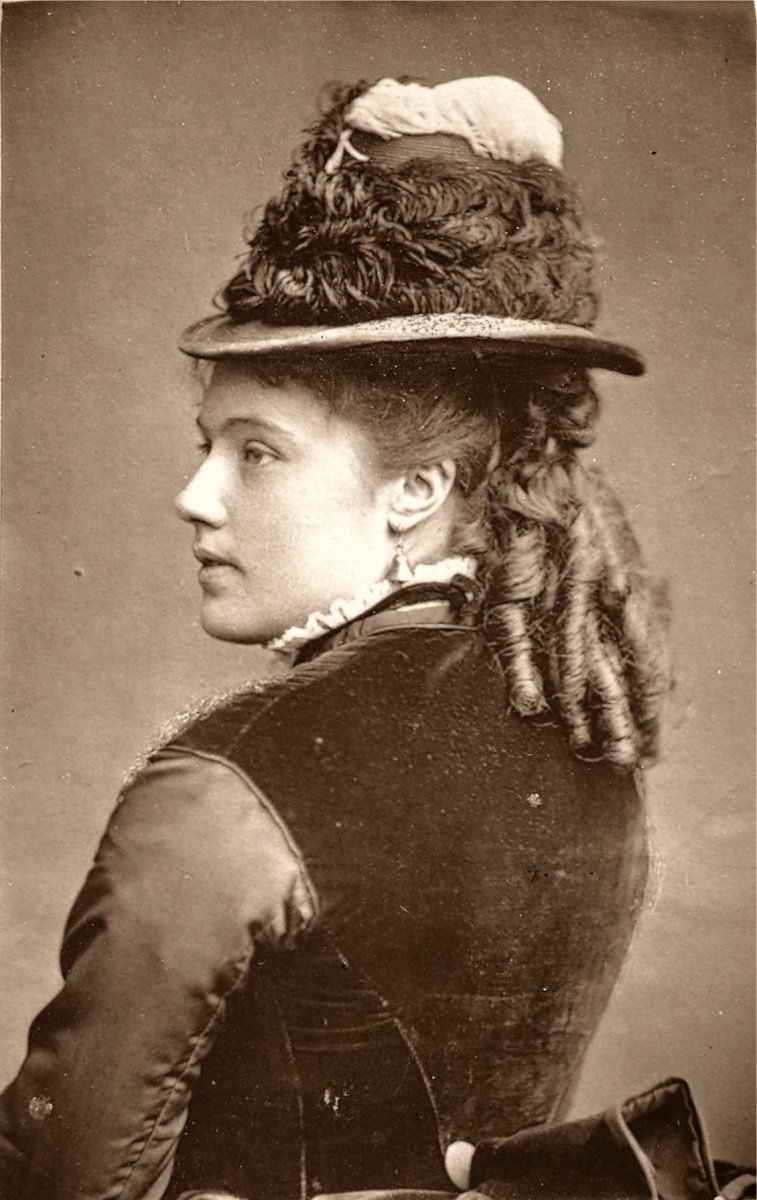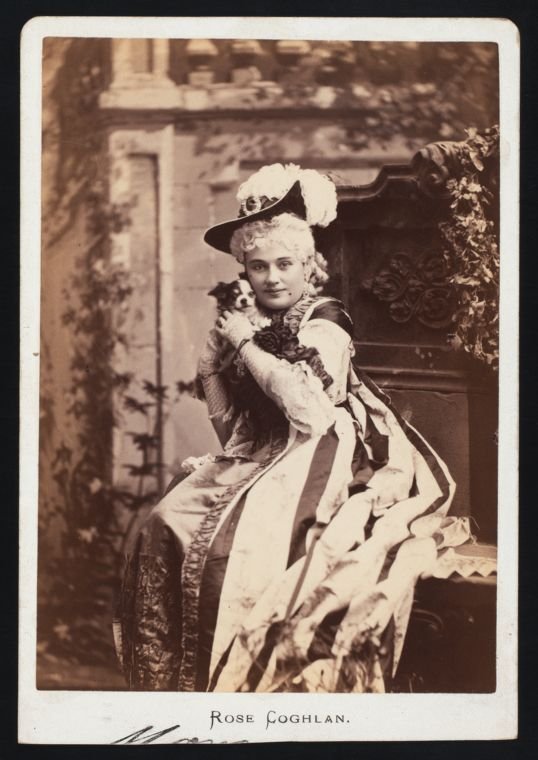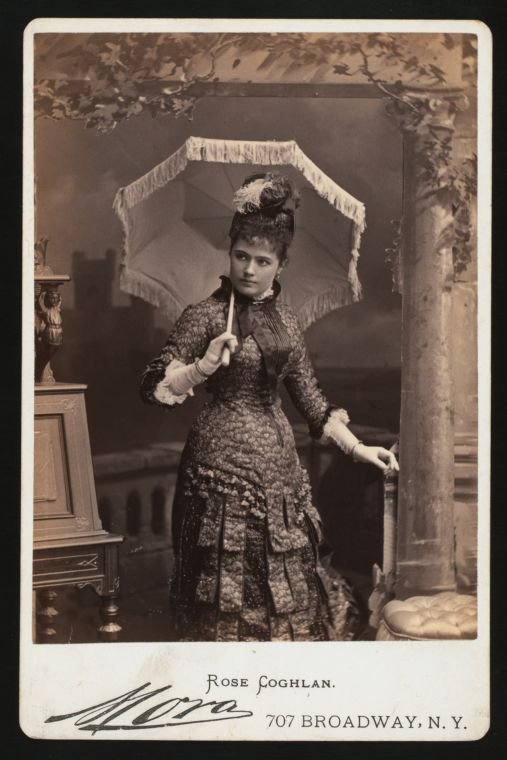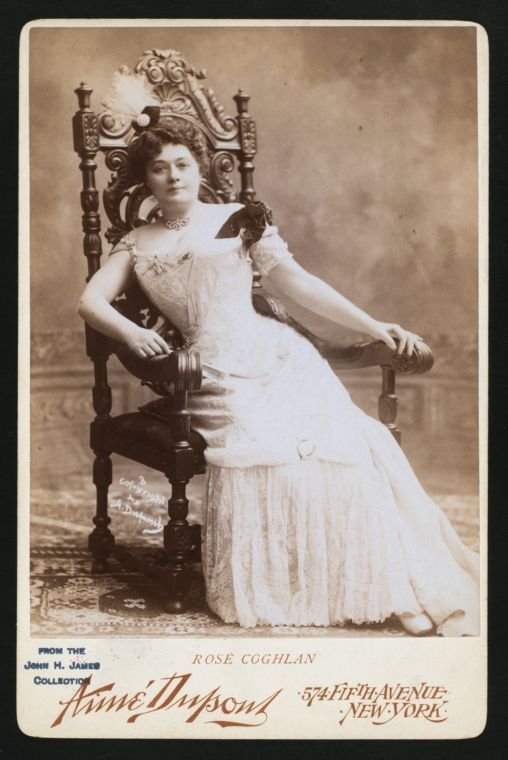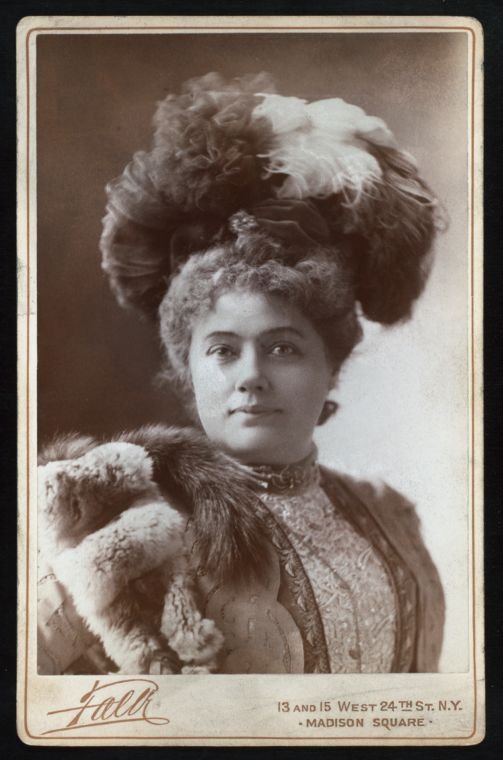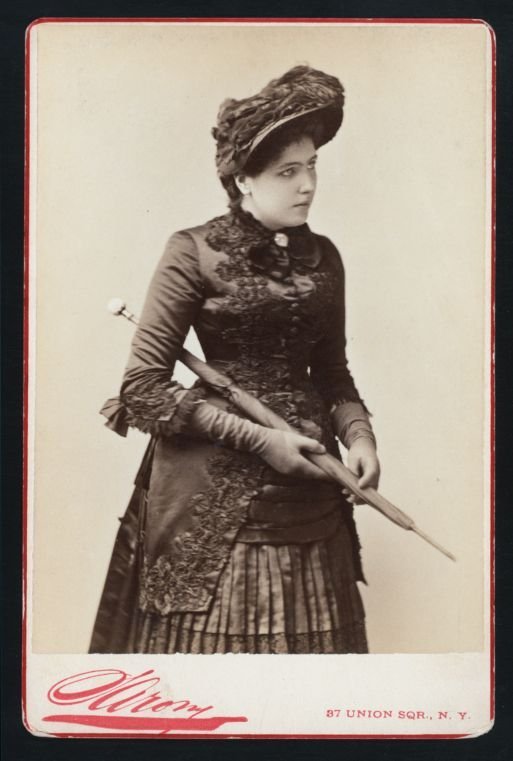
Following the 1899 death of her brother, Charles Coghlan, in 1901 Rose appeared at Elitch Theatre in the world premiere of her brother’s play, Fortune Bridge.
Rose stated that “my particular reason for coming to Denver was to produce my brother’s play — the one he finished just before his death. It’s called Fortune Bridge, but he didn’t give it the name.” Rose explained that the manuscript was sent to a typist and at the end her brother signed it and added his Canadian address: “Charles Coghlan, Fortune Bridge.” Apparently the typist moved it to the head of the first page and typed, “Fortune Bridge, by Charles Coghlan.” Rose stated “the name seemed to fit the play so well I allowed it to stand.”
[Borrillo, Theodore A. (2012). Denver’s historic Elitch Theatre : a nostalgic journey (a history of its times). Colorado. p. 49.]
Rose was married to John T. Sullivan, an actor who also appeared at the Elitch Theatre.
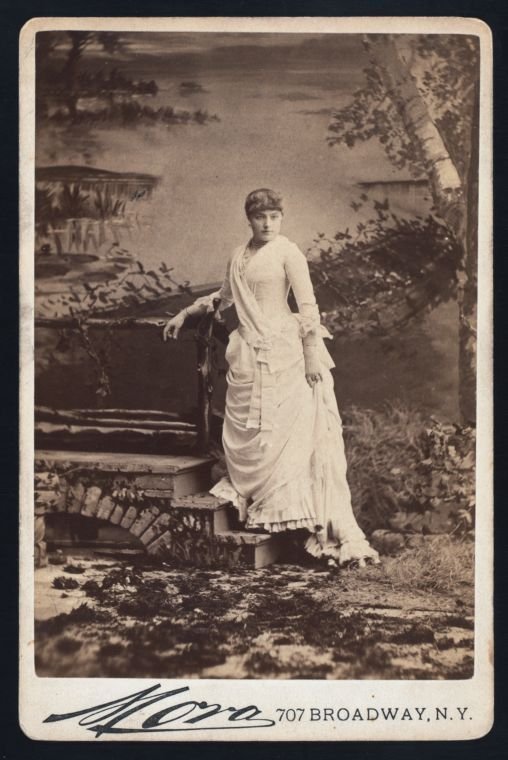
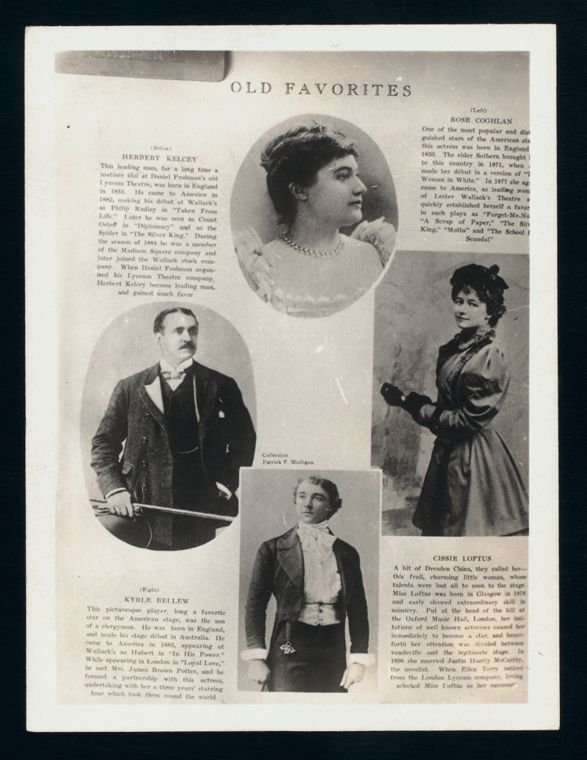
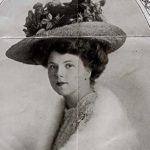
Rose Coghlan (1851–1932) was one of the most distinguished actresses to appear at the Historic Elitch Theatre during its early years. An English-born performer whose career stretched from the Victorian stage into the era of motion pictures, Coghlan had already spent decades as a celebrated leading lady in New York, London, and on tour before coming to Denver. Her reputation rested particularly on sophisticated comedy and drama, and she became closely associated with New York’s famed Wallack’s Theatre, where she was a leading member of the company for much of the period from the late 1870s through 1888. Among her best-known early successes were Countess Zicka in Diplomacy, Stephanie in Forget-Me-Not, and Nellie Denver in The Silver King.
Coghlan joined Elitch Theatre for the 1901 season, and her engagement had a deeply personal purpose. Her elder brother, celebrated actor and playwright Charles Coghlan, had died in 1899, leaving behind a completed but unproduced play. Rose brought that work, Fortune’s Bridge, to Elitch Theatre and presented its world premiere in Denver. She later explained that producing her brother’s final play was her particular reason for coming to Denver. According to her account, even the play’s title arose unexpectedly: Charles had written his Canadian address, “Fortune’s Bridge,” at the end of the manuscript, and a typist apparently mistook the words for its title. Rose thought the accidental title suited the play and retained it.
Her appearance at Elitch therefore represents more than another engagement by a nationally prominent star. Elitch Theatre became the place where Charles Coghlan’s final dramatic work first reached the stage, with his sister helping preserve and continue his theatrical legacy. Rose Coghlan herself continued performing for another two decades. Her later career included major Broadway appearances in Oscar Wilde’s A Woman of No Importance, Ulysses, Jack Straw, Trilby, Our Betters, and Deburau, as well as a transition to silent motion pictures. Her screen work included As You Like It (1912), in which she played Rosalind, and a 1915 film adaptation of The Sporting Duchess, a role closely associated with her stage career.
Seasons at the Theatre
- 1901
Elitch Theatre Productions/Roles:
- 1901 — Fortune’s Bridge — World premiere of the final play written by Rose Coghlan’s brother, actor-playwright Charles Coghlan. Rose came to Denver specifically to produce and appear in the work following her brother’s death in 1899.
Notable Roles, Awards, and Other Work:
- Countess Zicka — Diplomacy (1878): One of Coghlan’s important early American successes. She appeared in the original Broadway production at Wallack’s Theatre.
- Stephanie — Forget-Me-Not: One of the signature roles of her career and a performance for which she became particularly well known.
- Nellie Denver — The Silver King (1883): Starred in the original Broadway production of the enormously popular melodrama.
- Mrs. Arbuthnot — A Woman of No Importance (1893–1894): Starred as Mrs. Arbuthnot in the original Broadway production of Oscar Wilde’s play and was also credited as its producer.
- The title character — The Sporting Duchess: Coghlan became associated with the title role of this popular melodrama and later reprised the part for the 1915 silent-film version.
- Madame Morensky — Madame (1896): Starred on Broadway in a play written by her brother Charles Coghlan, illustrating the important professional as well as familial partnership between the two actors.
- Penelope — Ulysses (1903): Starred as Penelope in the original Broadway production of Stephen Phillips’s drama.
- Rosalind — As You Like It (1912): Played Shakespeare’s Rosalind in an early silent-film adaptation, part of Coghlan’s successful transition from the nineteenth-century stage to the emerging motion-picture medium.
- Long association with Wallack’s Theatre: Coghlan was a prominent member of Wallack’s celebrated New York company for much of the period between 1877 and 1888, earning particular distinction in comedy as well as dramatic roles and becoming one of the notable American stage actresses of her generation.
- More than five decades on the professional stage: Beginning her career in Britain before establishing herself in America, Coghlan remained professionally active into the 1920s. Her later Broadway credits included Jack Straw (1908), The School for Scandal (1909), Trilby (1915), Our Betters (1917), and Deburau (1920–1921).
Elitch Theatre Connections:
- 1897 — The White Heather (Stage/Broadway) — Amelia Bingham (HET 1904) — Coghlan and Bingham were members of the same original Broadway company at the Academy of Music. Coghlan played Lady Jane/Janet Maclintock and Bingham played Marion Hume. IBDB
- 1903 — Ulysses (Stage/Broadway) — Tyrone Power Sr. (HET 1905) — Coghlan starred as Penelope opposite Power as Ulysses in the Garden Theatre production; surviving period imagery specifically depicts the two performers together in the production. IMDb
- 1909 — The School for Scandal (Stage/Broadway) — Olive Wyndham (HET 1906) — Coghlan and Wyndham appeared together in the New Theatre’s Broadway revival of Sheridan’s comedy as members of the same company. IMDb
- 1910 — The Winter’s Tale (Stage/Broadway) — Pedro de Cordoba (HET 1913) — Coghlan and de Cordoba were both members of the cast of the New Theatre’s Broadway revival of Shakespeare’s play. IMDb
- 1911 — Vanity Fair (Stage/Broadway) — Pedro de Cordoba (HET 1913) — Coghlan and de Cordoba again appeared in the same Broadway company, this time in the 1911 production of Vanity Fair. Finding Aids
- 1916 — Shakespearean Masque honoring William Winter (Stage/Special Performance, Century Theatre) — Henrietta Crosman (HET 1899), James O’Neill (HET 1897), and Pedro de Cordoba (HET 1913) — Coghlan joined Crosman, O’Neill, de Cordoba and numerous other prominent actors in the Shakespearean masque honoring critic William Winter. Coghlan appeared as Mistress Page, Crosman as Rosalind, and O’Neill as Cardinal Wolsey; de Cordoba is also documented among the participating performers. Wikimedia Commons
- 1919 — Pretty Soft (Stage/Broadway) — Florence Eldridge (HET 1925) — Coghlan and Eldridge were both members of the original Broadway cast at the Morosco Theatre.
Wikipedia Link: