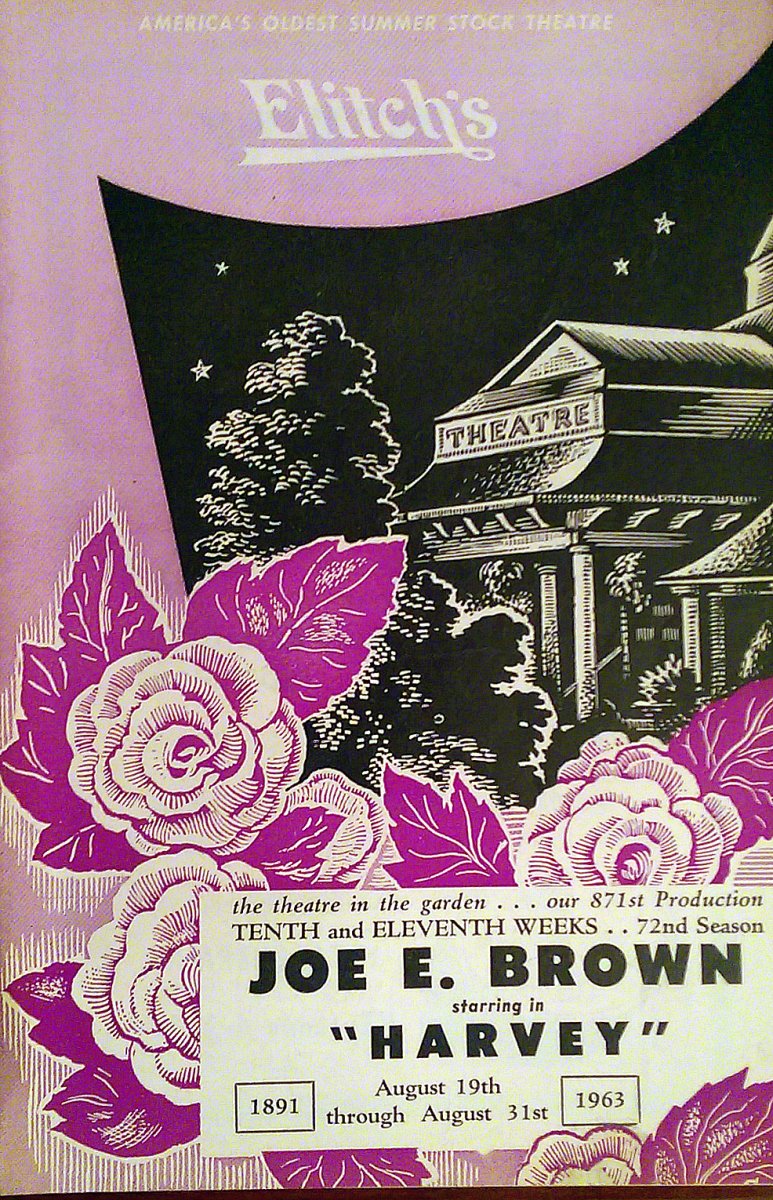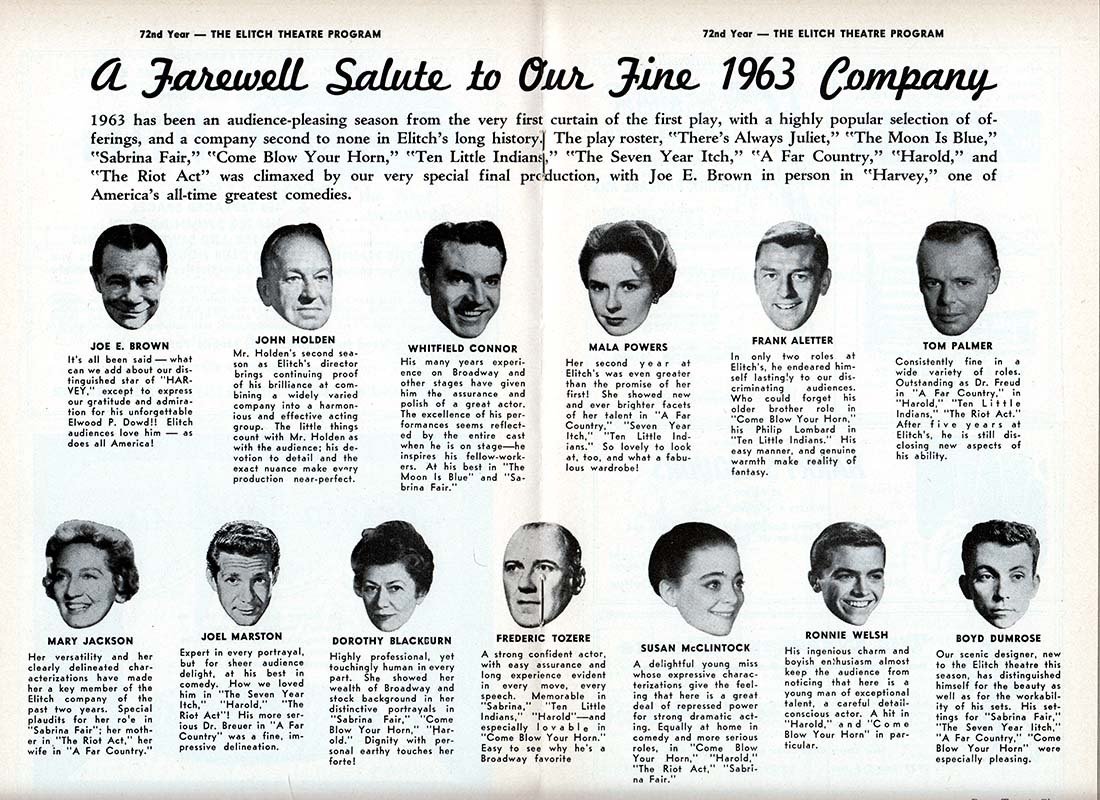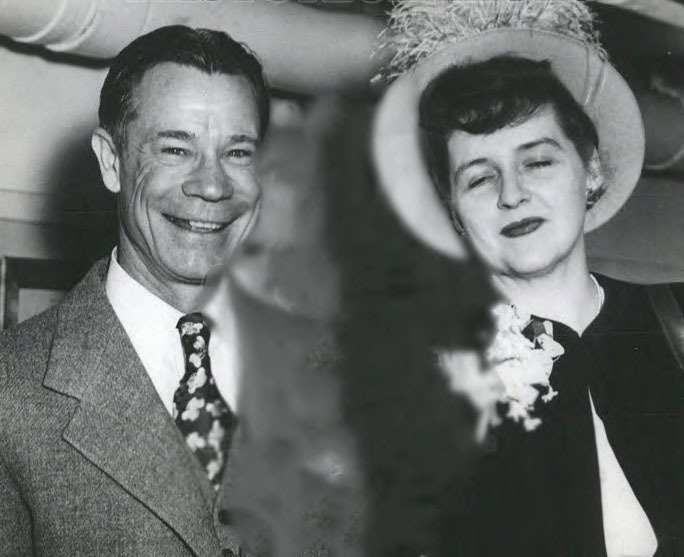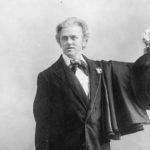
The final play of the 1963 season featured Joe E. Brown in the role of Elwood P. Dowd in Mary Chase’s Harvey. The play was awarded the Pulitzer Prize for Drama in 1945. Dowd’s dearest friend is Harvey, a six-foot-plus rabbit, invisible to all but a select few.
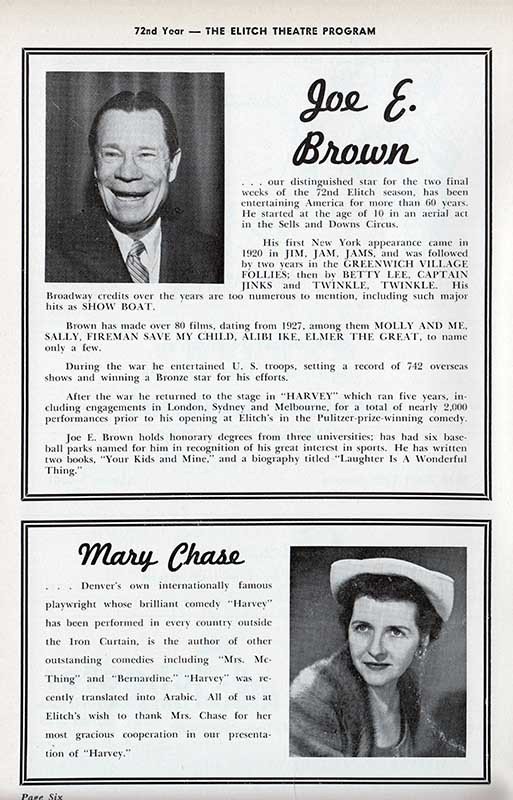
Joe E. Brown was one of America’s most beloved comedians, a performer whose career stretched from circus tumbling to vaudeville, Broadway, Hollywood, and television across more than five decades.
Born in 1891 in Holgate, Ohio, he is literally the kid who ran off to join the circus! He joined a troupe of acrobats at age nine and spent his early years bouncing between the circus, semi-professional baseball, and the vaudeville stage before comedy won out as his life’s calling. By the late 1920s he had signed with Warner Bros. and rocketed to stardom in On with the Show! (1929), the first all-color, all-talking musical comedy, becoming known for his grin, his comic timing, and a screen persona so friendly that he became a favorite of family audiences throughout the 1930s and 1940s.
Brown brought that same warmth and star power to the Elitch Theatre in the summer of 1963, when he closed out the season starring as Elwood P. Dowd in Mary Chase’s Pulitzer Prize-winning comedy Harvey. By the time he took the Elitch stage, Brown was already the definitive interpreter of the role, having performed it close to 2,000 times across the United States, Canada, England, Australia, and Hawaii — more than any other actor. The Rocky Mountain News raved that Brown simply was the lovable Dowd, praising the gentle, whiskey-soaked wisdom he brought to the character and the way he made Harvey the invisible rabbit feel almost real to the audience. It was a fitting late-career triumph for a performer who had spent his life bringing laughter to audiences, and it capped Brown’s long, celebrated relationship with the role that had, by then, become synonymous with his name.
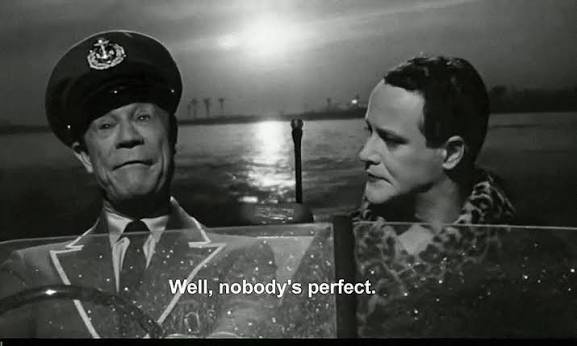
Beyond his stage work, Brown’s Hollywood legacy is defined above all by his unforgettable turn as Osgood Fielding III in Billy Wilder’s Some Like It Hot (1959), delivering the immortal closing line “Well, nobody’s perfect” in one of the most celebrated final moments in film history. He was also one of the few vaudeville-trained comedians to appear in a Shakespearean film, playing Francis Flute in the 1935 version of A Midsummer Night’s Dream, and he parlayed his genuine love of baseball into a string of popular Warner Bros. comedies, including Elmer, the Great and Alibi Ike, in which he played ballplayers for the Chicago Cubs.
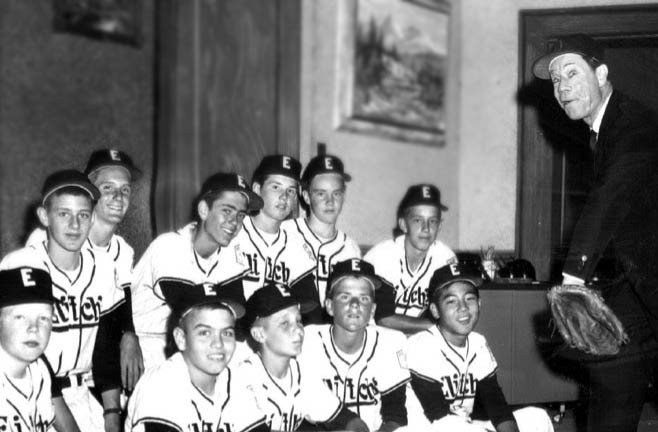
Offscreen, Brown was equally known for his generosity and civic-mindedness. Even before the USO existed, he traveled at his own expense to entertain troops across the Pacific, the Caribbean, and beyond during World War II, becoming one of only two civilians ever awarded the Bronze Star for his service to morale. He later became the first president of PONY Baseball and Softball, a post he held for over a decade, reflecting a lifelong devotion to the game that had nearly become his career before comedy intervened. Brown died in 1973 at age 81, remembered as a gifted comic actor, a tireless entertainer of servicemen, and, for one memorable summer in 1963, a cherished star of the Elitch stage.
Seasons at the Theatre
- 1963
Elitch Theatre Productions/Roles:
- Elwood P. Dowd in Harvey
Notable Roles, Awards, and Other Work:
- Osgood Fielding III in Some Like It Hot (1959) — His most enduring role, delivering one of cinema’s most famous closing lines: “Well, nobody’s perfect.” This Billy Wilder comedy is considered one of the greatest films ever made and regularly tops all-time best lists.
- Elwood P. Dowd in Harvey (stage, 1950s–1963) — Brown performed this role nearly 2,000 times across multiple countries and continents. The play itself won the Pulitzer Prize for Drama in 1945.
- Francis Flute in A Midsummer Night’s Dream (1935) — Brown was one of the very few vaudeville comedians to appear in a Shakespearean film.
- Elmer in Elmer, the Great (1933) — One of his signature Warner Bros. comedy vehicles, playing a baseball player for the Chicago Cubs, blending his two great passions — comedy and baseball.
- Joe Beaton in On with the Show! (1929) — Brown shot to stardom after appearing in the first all-color, all-talking musical comedy.
- Cap’n Andy Hawks in Show Boat (1951 film; reprised on stage, 1961) — A career-highlight dramatic and musical role for MGM, later revived in the New York City Center stage revival.
- First President of PONY Baseball and Softball (1953–1964) — Helped found and lead the national youth baseball organization.
- Bronze Star recipient — One of only two civilians awarded the honor for his extensive, self-funded work entertaining American troops during World War II.
- Author of two memoirs, Your Kids and Mine (1944) and Laughter Is a Wonderful Thing (1956).
Elitch Theatre Connections:
- Hollywood Canteen (1944, film) Co-star: Kitty Carlisle (Elitch 1965)
- The Ann Sothern Show, “Olive’s Dream Man” (1960, TV) Co-star: Ann Sothern (Elitch 1968)
Joe E. Brown guest-starred in this episode as Olive’s new boyfriend, and Sothern would go on to perform at Elitch Theatre eight years later, in 1968.
Wikipedia Link: