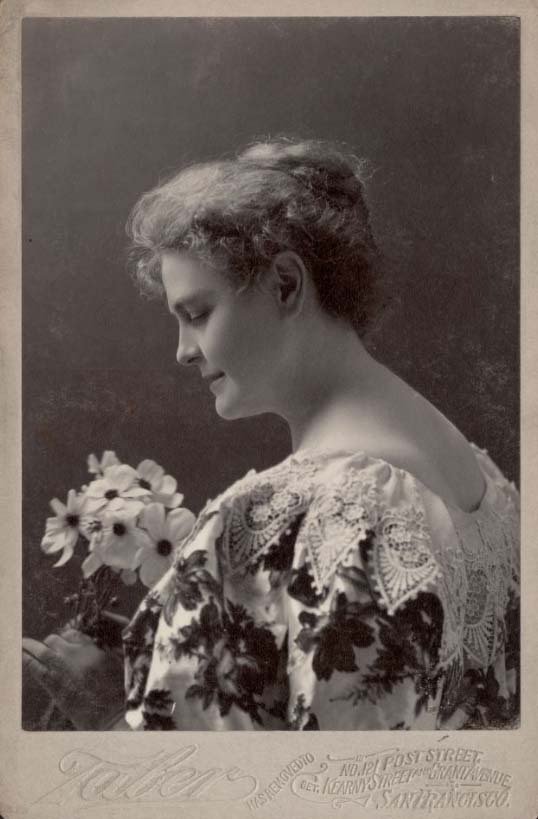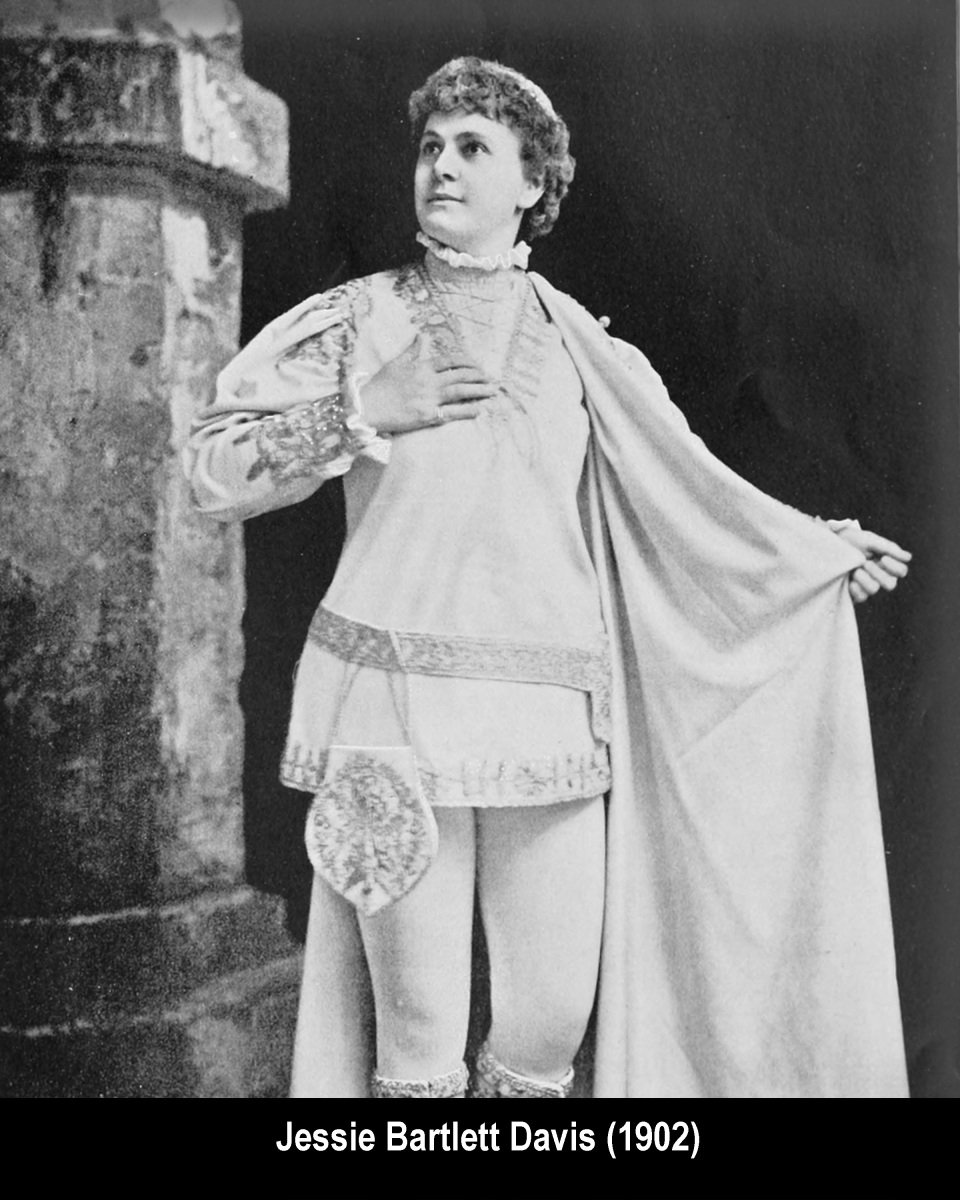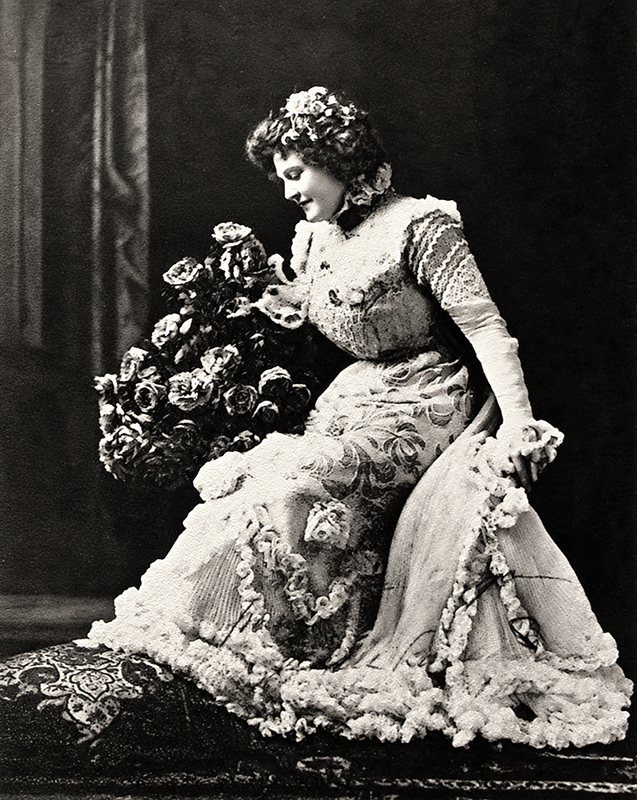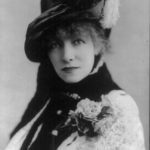
Jessie Bartlett Davis was one of the most celebrated American contraltos of the late nineteenth century, a singer whose rich voice and commanding stage presence made her a star of both grand and comic opera. Born Jessie Fremont Bartlett near Morris, Illinois, in 1859, she began singing as a child and later studied in Chicago while working as a church soloist. Her professional breakthrough came during the nationwide H.M.S. Pinafore craze, when she was engaged to sing Little Buttercup with J. H. Haverly’s Chicago Church Choir Company. She subsequently moved into grand opera, appearing as Siebel in Faust alongside the internationally renowned soprano Adelina Patti, and performed with the Carleton Opera Company and the American Opera Company before establishing the association that would define her career: The Bostonians. Contemporary biographical accounts praised not only her voice but also her abilities as an actress, an important distinction in an era when opera singers were not always considered equally accomplished in both arts.
As the leading contralto and one of the principal stars of The Bostonians, Davis became a major figure in the development of American light opera. Her signature role was the minstrel Alan-a-Dale in Reginald De Koven and Harry B. Smith’s Robin Hood, first produced in 1890. Davis became inseparably associated with the interpolated De Koven ballad “Oh, Promise Me,” which became one of the great popular songs of its era. Her repertory was remarkably broad, ranging from Carmen and Azucena in Il Trovatore to Nancy in Martha, Dorothea in Don Quixote, and roles in The Bohemian Girl and Fatinitza. She also created Idalia in Victor Herbert’s Prince Ananias and Dolores in Herbert’s The Serenade; the latter brought her to Broadway in 1897.
By the time Davis came to Elitch Theatre in 1902, she was already a nationally famous performer. Mary Elitch Long secured Davis as a special attraction for a one-week engagement beginning June 1 in Shakespeare’s A Midsummer Night’s Dream. The Rocky Mountain News called the booking “a brilliant achievement” and declared that Davis had “no peer among American singers.” Her visit was more than a theatrical engagement: Mary Elitch remembered Davis warmly as a personal friend who delighted in the Gardens and in Elitch’s weekly children’s day. During her Denver stay, Davis also appeared with full orchestra at a June 6 symphony concert, singing “Beyond the Gates,” “The Rosary,” and, inevitably, “Oh, Promise Me.”
Davis continued performing after her Elitch appearance. Having left The Bostonians, she found success on the vaudeville circuit—contemporary reports claimed a salary of $1,000 a week—and in 1903 returned to Broadway in a revival of Erminie. She remained professionally active almost until her death. Davis died suddenly at her Chicago home on May 14, 1905, at approximately forty-six years of age; contemporary accounts attributed her death to heart disease associated with nephritis. Her career bridged grand opera, comic opera, Broadway, vaudeville, popular song, and the earliest era of commercial sound recording, leaving her particularly remembered as the voice that helped make “Oh, Promise Me” an American standard.
Seasons at the Theatre
- 1902 – Special guest appearance during the Elitch Theatre summer season. Davis appeared for a one-week engagement beginning June 1, 1902.
Elitch Theatre Productions/Roles:
- 1902 — A Midsummer Night’s Dream — Davis as featured guest performer.
- June 6, 1902 — Symphony Concert at Elitch Gardens — Davis appeared with full orchestra under Signor Cavallo, performing “Beyond the Gates,” “The Rosary,” and her signature song, “Oh, Promise Me.” Mary Elitch later specifically recalled the concert in her memoir.
Notable Roles, Awards, and Other Work:
- Alan-a-Dale — Robin Hood (Reginald De Koven/Harry B. Smith) — Davis’s signature role and the performance with which “Oh, Promise Me” became closely associated.
- Little Buttercup — H.M.S. Pinafore — An important early role with J. H. Haverly’s Chicago Church Choir Company and the beginning of her operatic career.
- Siebel — Faust — Sang in grand opera in New York opposite the celebrated Adelina Patti as Marguerite.
- Dorothea — Don Quixote — Created the role with The Bostonians in 1889.
- Idalia — Prince Ananias — Created the role in Victor Herbert’s comic opera in 1894.
- Dolores — The Serenade — Created the role in Victor Herbert’s operetta and performed it on Broadway in 1897.
- Other major roles included Carmen in Carmen, Azucena in Il Trovatore, Nancy in Martha, Cynisca in Pygmalion and Galatea, and Wladimir Dimitrowitsch Samoiloff in Fatinitza.
- The Bostonians — Davis was one of the company’s leading performers and prima donnas during its greatest period of national popularity. A contemporary biographer went so far as to suggest that, had The Bostonians officially recognized individual stars, Davis would have been theirs.
- Early recording artist — Davis made recordings during the 1890s, including “Oh, Promise Me,” “O Genevieve,” and “Don Jose of Sevilla,” making her voice part of the first generation of commercially recorded American theatrical performers.
- Broadway — The Serenade (1897) and Erminie (1903).
- Vaudeville — After leaving The Bostonians, Davis became a successful vaudeville attraction, reportedly commanding as much as $1,000 per week, an extraordinary salary for the period.
- Writer and composer — In addition to performing, Davis wrote stories and poetry and composed music for several songs. Her biographical entry in A Woman of the Century specifically mentions her story “Only a Chorus Girl.”
- Davis’s cultural prominence was sufficient that sculptor Aloys Loeher’s marble bust of her was exhibited in the Fine Arts Department of Chicago’s 1893 World’s Columbian Exposition.
Elitch Theatre Connections:
- Mary Elitch Long — Davis’s most significant Elitch connection was with the theatre’s celebrated proprietor and manager. Mary personally secured Davis for the 1902 engagement and later described her as one of the most charming women she had ever known. Mary recalled spending hours with Davis beneath the trees at Elitch Gardens during her Denver visit and remembered Davis’s particular enjoyment of the Gardens’ children’s day.
Wikipedia Link: