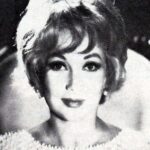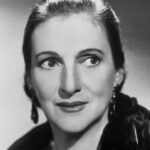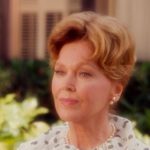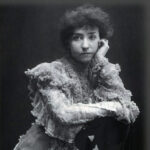
Florence Eldridge was a powerhouse American stage and screen actress whose career stretched across five decades, marked by her intelligence, emotional depth, and commanding presence. Born in 1901, she became a Broadway favorite in the 1920s and ’30s, later earning acclaim for her nuanced dramatic performances alongside her husband, the legendary actor Fredric March—most notably in Long Day’s Journey Into Night. Eldridge also appeared in notable films such as The Story of Temple Drake and Christopher Columbus, but the stage was always her true artistic home. Known for her sharp wit, disciplined craft, and ability to elevate every project she touched, she left a lasting mark as one of the great character actresses of her generation.
Florence Eldridge was born in Brooklyn in 1901 and made her professional debut in the chorus of a 1918 musical. In 1922, she won theatrical acclaim for her portrayal of the terrified heroine Annabelle West in The Cat and the Canary and the stepdaughter role in Six Characters in Search of an Author.
[Borrillo, Theodore A., (2012). Denver’s historic Elitch Theatre : a nostalgic journey (a history of its times). pp. 135.]
Fredric March and Florence Eldridge were the lead actors for the (1926) season. In a book entitled The Elitch Garden Story (Memories of Jack Gurtler), by Jack Gurtler and Corinne Hunt, and published in 1982, the following story is told about Fredric March and Florence Eldridge. John Mulvihill (Gurtler’s grandfather), had a policy that no leading man would be married to his leading lady because he believed that “people would not pay money to watch a man make love to his own wife on stage.” During the run, Fredric March informed John Mulvihill that he was in love with Florence Eldridge and that they wanted to get married. Mulvihill alerted March to his policy. March may not have taken him seriously, for he and Florence Eldridge drove to Colorado Springs and got married. Mulvihill confronted March, saying “I understand that you are now man and wife,” to which March replied, “That’s right, J.M.! I love this girl too much to take the chance of losing her by waiting till the season’s over.” Mulvihill fired Florence Eldridge. Mulvihill had already engaged another to play her part during the season.
The story is at variance with interviews that Edwin Levy, head of the theater department at the University of Denver, had with Fredric March and Melville Burke in 1952 and 1953, respectively. The interviews revealed the following:
Miss Eldridge met Mr. March at the home of a mutual friend in New York before the summer of 1926. After the Elitch season, they were married in Mexico. Manager Mulvihill, making plans for the season of 1927, believed audiences would not be interested in seeing a leading man play love scenes with his own wife on stage and decided not to rehire Miss Eldridge for the summer of 1927.
[Borrillo, Theodore A., (2012). Denver’s historic Elitch Theatre : a nostalgic journey (a history of its times). pp. 139.]
Seasons at the Theatre
Productions/Roles:
Notable Roles, Awards, and Other Work:
- Nominated for the Tony Award for Best Actress in a Play in 1957 for her performance in Long Day’s Journey into Night.
Elitch Theatre Connections:
- Appeared in Six Cylinder Love with Elitch Theatre alum, Ernest Truex.
- Appeared on Broadway with her husband, Fredric March, in Long Day’s Journey into Night.
- On Broadway in The Autumn Garden with alums, Fredric March and Kent Smith.
- Eldridge appeared in multiple films with her husband, Elitch Theatre Alum, Fredric March, including Les Misérables, Christopher Columbus and Inherit the Wind.
- The original Broadway production of The American Way opened at the Center Theatre on January 21, 1939. Eldridge appeared with Fredric March. Elitch Alum, Dick Van Patten, had a role as Martin’s grandson, Karl, at age 9; and HET alum, David Wayne, played an adult version of the same character.