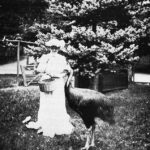
Denver’s “Queen of Comics”
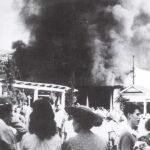
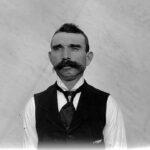
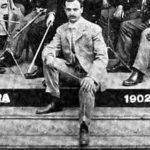
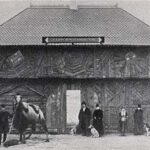
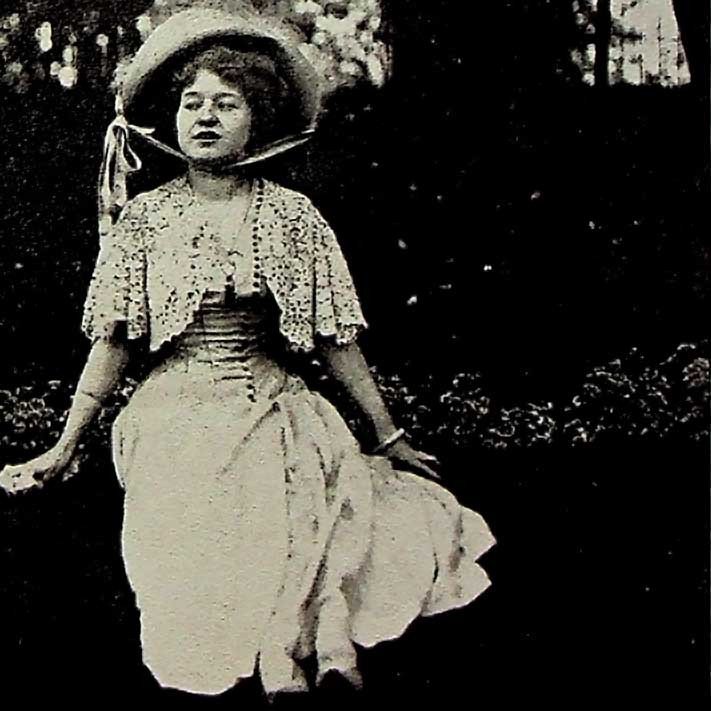
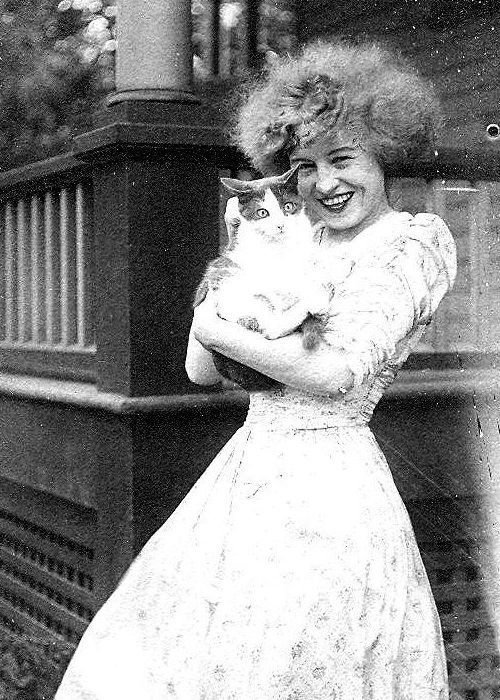
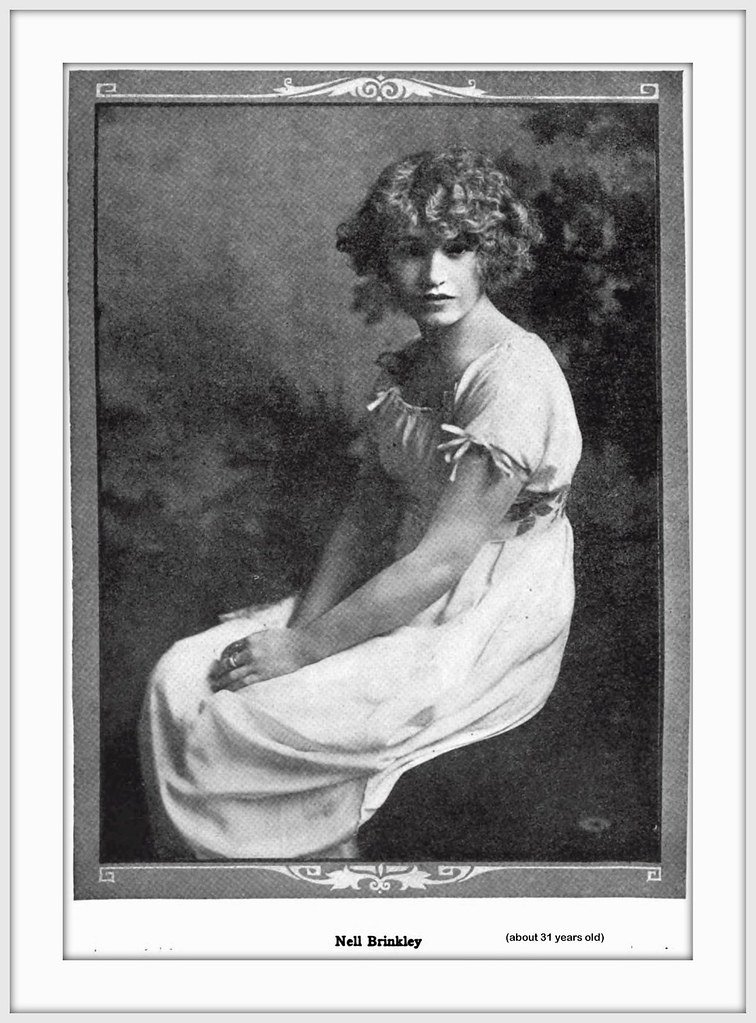
Nell Brinkley was born on September 5, 1886, in Denver, Colorado, the daughter of Robert Serrett Brinkley and May French Brinkley.i In 1893, when Nell was seven, the family moved to the small town of Edgewater on Denver’s western border, overlooking Sloan’s Lake, where her father later served as mayor.ii As a small child in Denver, Nell drew place-setting illustrations of “knobby-kneed kiddies” for Mary Elitch’s garden parties at Elitch Gardens, the amusement park and botanical garden Elitch operated on the city’s northwest side.iii Elitch herself later recalled a far more harrowing episode from one of the girl’s visits: while Elitch and Nell’s mother strolled the grounds, the child wandered off and was discovered perched on the bars of the cage of Elitch’s lion Kit, one small hand reaching in to stroke the animal’s head. A keeper managed to coax the lion’s attention and draw the child gently away before she came to harm, an experience Elitch called the most unnerving of her career.iv
Brinkley’s formal schooling was modest: she attended a Denver grade school that had no electricity, and she left high school without graduating in order to pursue illustration, having received no formal art training beyond two years of art-school lessons her father paid for.v As a teenager she went to work for the Denver Post drawing editorial cartoons for seven dollars a week, and, according to one account, was eventually let go after an unflattering drawing of the Pope; she was then hired by the Denver Times, where she continued producing pen-and-ink illustrations.vi Already, local papers were taking note of the teenager’s talent. A Denver newspaper described her in 1908 as “the graceful, blonde, fluffy little Denver girl who used to do art stunts on the News and Times.”vii
It was her work at the Denver Times that caught the attention of newspaper magnate William Randolph Hearst and his editor Arthur Brisbane, who in 1907 persuaded the twenty-one-year-old to leave Denver for New York.viii She and her mother relocated together, and Brinkley began work as an illustrator for the New York Evening Journal, making her debut on November 26, 1907, on a comics page paired with a profile of actress Valeska Suratt.ix She was catapulted to national attention soon after when she was assigned to cover the sensational 1907–1908 murder trial of Harry K. Thaw, sketching courtroom scenes and drawing repeatedly on the trial’s central figure, actress and former model Evelyn Nesbit; the coverage made Brinkley’s name a household one.x
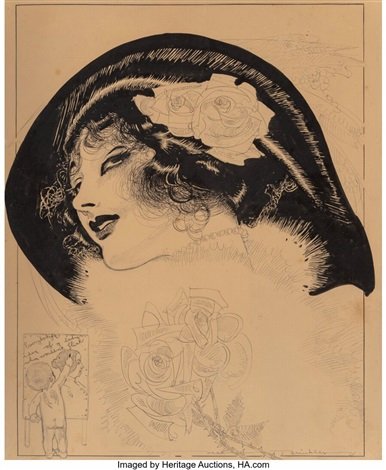
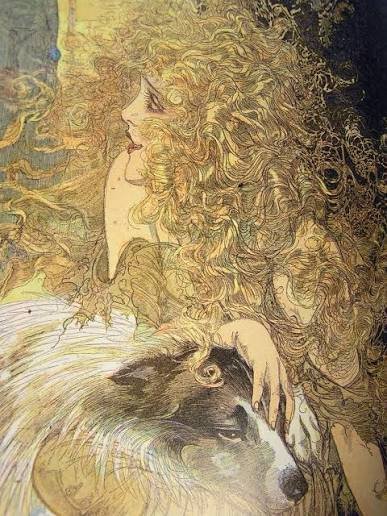
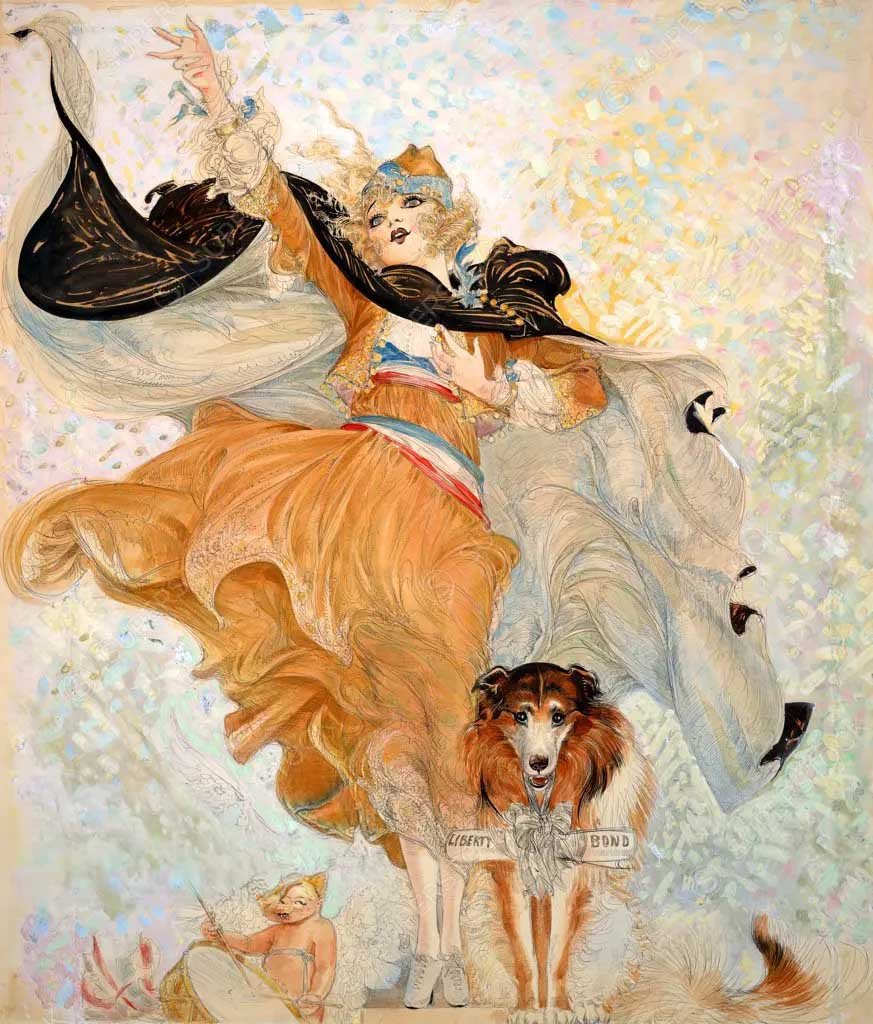
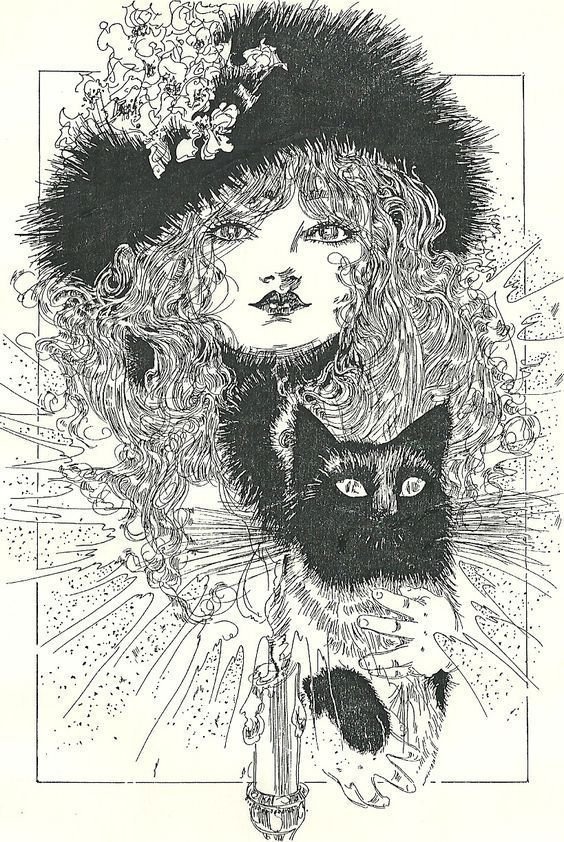
Within a few years, Brinkley’s curly-haired, high-spirited “Brinkley Girl” had become a national sensation, eclipsing the more staid, corseted “Gibson Girl” of illustrator Charles Dana Gibson. The character inspired popular songs and a feature in the 1908 Ziegfeld Follies, was merchandised on hair curlers and in department-store promotions, and was widely read as an emblem of the era’s more independent “new woman.”xi Brinkley wrote as well as drew her features, producing breathless, dash-filled prose alongside her art, and later biographer Trina Robbins found that beneath the hearts and flowers Brinkley was, in her words, “a chronicler, a feminist, a blood-and-thunder storyteller,” who championed working women, profiled figures such as Eleanor Roosevelt and Amelia Earhart, and even flew in an early biplane to report the experience for her readers.xii Her best-known serial, the wartime adventure “Golden Eyes and Her Hero Bill,” ran from 1918 to 1919 and followed a heroine and her dog, Uncle Sam, into wartime France. Brinkley married newspaperman Bruce McRae Jr. in 1920; the couple had one son, in 1922, and divorced in 1937.xiii
Brinkley continued to produce syndicated illustrated features for Hearst papers, King Features Syndicate, and magazines including Cosmopolitan, Good Housekeeping, and Harper’s Magazine for more than three decades, but by the mid-1930s the rise of photography in newspapers had begun to erode the market for illustrators of her kind.xiv Her final major series, Heroines of Today, begun in 1937, celebrated women in unconventional roles, from forest-fire spotters to wartime combatants. She died on the night of October 21, 1944, in a New Rochelle, New York hospital after a long illness; her death drew little notice amid the crush of Second World War news.xv
Though largely forgotten for decades after her death, Brinkley has since been recognized as a pioneering figure in American illustration and comics, sometimes called the “Queen of Comics” for her nearly four-decade career.xvi She was inducted into the Friends of Lulu Women Cartoonists Hall of Fame in 2008 and into the Eisner Award Hall of Fame at San Diego Comic-Con in 2020, and her work has since been revisited in exhibitions, in Trina Robbins’s biography Nell Brinkley and the New Woman in the Early 20th Century, and in the collection The Brinkley Girls: The Best of Nell Brinkley’s Cartoons from 1913–1940.xvii For a girl who began by sketching place cards at Elitch Gardens and narrowly escaped the jaws of Mary Elitch’s lion, Brinkley’s rise from small-town Colorado to the center of New York’s newspaper culture remains one of Denver’s more remarkable creative stories.
Greatest Achievements and Notable Works:
- Creating the “Brinkley Girl” – Her curly-haired, spirited illustrated heroine became a genuine national phenomenon, eclipsing Charles Dana Gibson’s more staid “Gibson Girl” as the dominant feminine ideal in American popular culture during the 1910s and 1920s.
- Ziegfeld Follies recognition (1908) – The Brinkley Girl was featured as a theme in the Follies, and multiple popular songs, including “The Nell Brinkley Girl,” were written in her honor — a rare level of crossover fame for a newspaper illustrator.
- Breakthrough coverage of the Harry K. Thaw murder trial – Her courtroom sketches of the “Trial of the Century” and her drawings of Evelyn Nesbit launched her to national prominence within months of arriving in New York, establishing her as a serious journalistic illustrator, not just a decorative one.
- “Golden Eyes and Her Hero Bill” (1918–1919) – Widely regarded as her finest creative achievement, this fifteen-part WWI serial paired an unusually proactive, independent heroine with Art Nouveau–influenced illustration, and is still cited by historians as a landmark in early adventure comics for women.
- Hall of Fame inductions – She was inducted into the Friends of Lulu Women Cartoonists Hall of Fame in 2008 and, more significantly, into the Eisner Award Hall of Fame at San Diego Comic-Con in 2020 — comics’ highest honor, cementing her posthumous recognition as a foundational figure in the medium.
Wikipedia Link:
Endnotes:
-
- i Nell Brinkley, Wikipedia, https://en.wikipedia.org/wiki/Nell_Brinkley (accessed August 12, 2026).
- ii Ibid.
- iii Ibid.
- iv Mary Elitch, quoted in Lady of the Gardens, p. 15.
- v Creating an Archetype: The Woman Behind the Brinkley Girl, Clothed in Crinoline (Substack), December 29, 2024, https://clothedincrinoline.substack.com/p/creating-an-archetype-the-woman-behind (accessed August 12, 2026); Nell Brinkley, Wikipedia.
- vi Creating an Archetype: The Woman Behind the Brinkley Girl, Clothed in Crinoline; Nell Brinkley, Wikipedia; Nell Brinkley: Topics in Chronicling America, Library of Congress Research Guides, https://guides.loc.gov/chronicling-america-nell-brinkley (accessed August 12, 2026).
- vii Creating an Archetype: The Woman Behind the Brinkley Girl, Clothed in Crinoline.
- viii Nell Brinkley, Wikipedia; Nell Brinkley: Topics in Chronicling America, Library of Congress Research Guides.
- ix Nell Brinkley, Wikipedia.
- x Nell Brinkley, Wikipedia; Creating an Archetype: The Woman Behind the Brinkley Girl, Clothed in Crinoline.
- xi Nell Brinkley, Wikipedia; Paul Gravett, “Nell Brinkley: A New Woman in the Early 20th Century,” paulgravett.com, https://paulgravett.com/articles/article/nell_brinkley (accessed August 12, 2026).
- xii Paul Gravett, “Nell Brinkley: A New Woman in the Early 20th Century,” paulgravett.com.
- xiii Nell Brinkley, Wikipedia.
- xiv Nell Brinkley, Wikipedia.
- xv Nell Brinkley, Wikipedia.
- xvi Nell Brinkley: Topics in Chronicling America, Library of Congress Research Guides.
- xvii Nell Brinkley, Wikipedia.