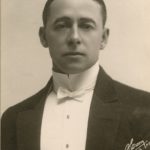
Long before he became one of Hollywood’s most recognizable faces, Edward G. Robinson spent two summers treading the boards of the Elitch Theatre. Born Emanuel Goldenberg in Bucharest, Romania, in 1893, Robinson immigrated to New York’s Lower East Side as a child and trained at the American Academy of Dramatic Arts, where he adopted the stage name that would become synonymous with Hollywood’s Golden Age. By the time he arrived in Denver, he had already spent nearly a decade honing his craft in stock companies and on Broadway.
Robinson joined the Elitch Theatre’s summer stock company in 1921 at the invitation of director Rollo Lloyd, appearing in a rotating repertory of five productions that showcased his range in character roles. He returned for a second season in 1922, again working under Lloyd alongside leads Ernest Glendenning and Helen Menken. These summers in Denver came at a formative moment in Robinson’s career — he was still primarily a stage actor building his reputation, nearly a decade before “Little Caesar” would make him a household name.
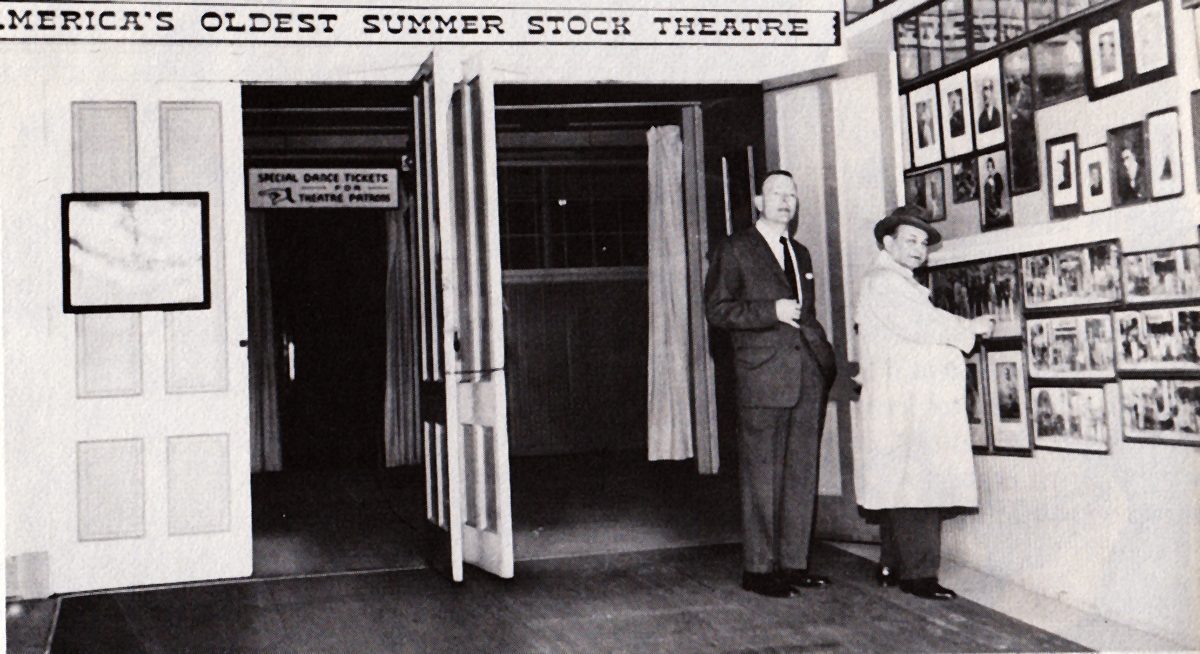
Robinson’s connection to Elitch endured long after his stock company days. In 1958, while touring with the Broadway hit “Middle of the Night,” he made a point of stopping back at the theatre to reminisce. Actor Whitfield Connor, who was performing there that season, later recalled Robinson sitting quietly out front to take in the stage before heading backstage, where he left a note on the leading man’s dressing room mirror: “Good luck to the leading man. Eddie Robinson.”
From these early Denver summers, Robinson went on to a legendary career spanning more than 100 films and 30 Broadway plays over six decades. He became one of the defining stars of the gangster genre and one of the most respected character actors of his generation, equally at home in crime dramas, film noir, and prestige pictures. Though he never received a competitive Academy Award, the Academy honored him with an Honorary Award for lifetime achievement shortly after his death in 1973 — a fitting tribute to a career that began, in part, on the Elitch stage.
Seasons at the Theatre
Productions/Roles:
- 1921 Season: Engaged by director Rollo Lloyd to play character roles across the summer’s repertory, which included Grumpy (by Horace Hodges and T. Wigney Percyval), The Lady of the Lamp (by Earl Carroll), The Cave Girl (by George Middleton and Guy Bolton), and a bill featuring Trifles (by Susan Glaspell), scenes from Romeo and Juliet, and How He Lied to Her Husband (by Bernard Shaw)
- 1922 Season: Company member under returning director Rollo Lloyd, performing alongside leads Ernest Glendenning and Helen Menken
Notable Roles, Awards, and Other Work:
- Title role in Little Caesar (1931), the film that launched his career as a Hollywood star and defined the screen gangster archetype
- Starring roles in the film noir classics Double Indemnity and The Woman in the Window (both 1944)
- Dathan in Cecil B. DeMille’s The Ten Commandments (1956)
- Tony Award nomination for Best Actor in a Play for Middle of the Night (1956)
- Appeared in more than 100 films and 30 Broadway plays over a 60-year career
- Received an Academy Honorary Award for lifetime achievement in 1973
- Ranked #24 on the American Film Institute’s list of Greatest Screen Legends
- Prominent public critic of fascism and Nazism during the 1930s and 1940s, and a major contributor to war relief organizations
Elitch Theatre Connections:
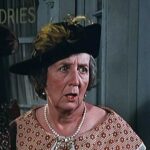
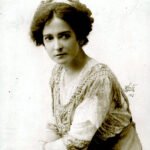
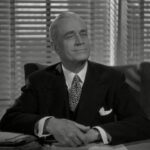
- Cecil B. DeMille’s film, The Ten Commandments, featured multiple Elitch Theatre alum, including: Edward G. Robinson, Vincent Price, Addison Richards, Douglass Dumbrille, and Maude Fealy.
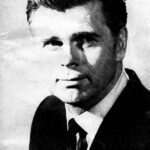
- Little Caesar (film, 1931): Douglas Fairbanks, Jr. Fairbanks had a role supporting Robinson.
Wikipedia Link: