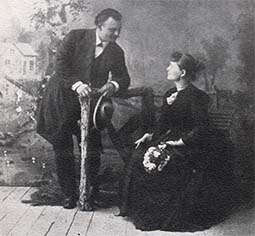
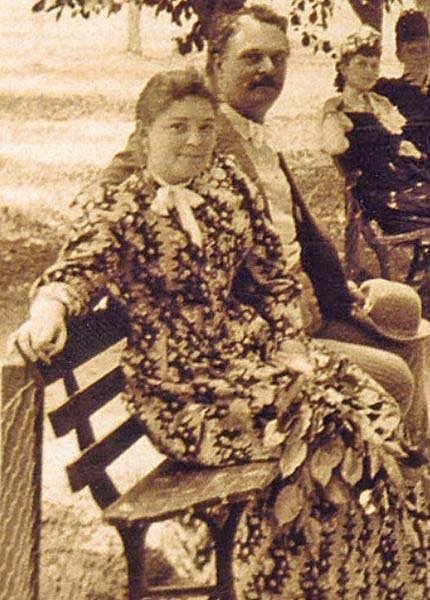
John Elitch was tall, dark and attractive with black curly hair and a mustache. He
was six years older than Mary, having been born on April 10, 1850. By the time he
was 12 years old, he was with his family in Santa Clara, California, where he later
attended Santa Clara College. After his attendance at college, John worked with his father in the restaurant business.
John courted Mary with daily notes delivered to her by her 10-year-old brother
Edward, who was bribed with a dime to deliver the notes and return Mary’s
answers. At last, a note from John read, “I’m going to San Francisco for a job; will
you marry me when I come for you?” Edward delivered Mary’s scribbled note to
John; the answer was “Yes.”
John got a job in a restaurant and started saving his money. Finally he returned
to Santa Clara, and Edward carried the news to Mary. John arrived to marry
her. Mary knew that a marriage to John would incur the wrath of her stern and
protective father.
[Borrillo, Theodore A. Denver’s Historic Elitch Theatre: A nostalgic journey, 2012. .]
In 1880, John and Mary looked to Denver to begin over. They arrived in Denver
during the summer of 1880, without money and without friends, but with a desire
and willingness to work. John secured a job as a cook in the Arcade restaurant,
located at Larimer and Sixteenth Streets. The following year, the Elitchs learned
that silver was discovered in Durango. In the spring of 1881, they took the savings
that they had accumulated across the snowy San Juan Mountains and opened a
restaurant in Durango in time to feed the spring prospectors. It was a prosperous
year for them. By the winter of 1881, they had earned $4,000.00, a decent profit.
John, again moved by the lure of the theater, returned to the warmer weather of
California and again invested in a traveling stock company and once more lost this
investment.
John returned to Denver in 1882 and, with the financial assistance of a friend,
opened an oyster and chop house at 16th and Curtis Streets. While it was popular
and prospered, ultimately, its accommodations became inadequate and John set out for another enterprise.
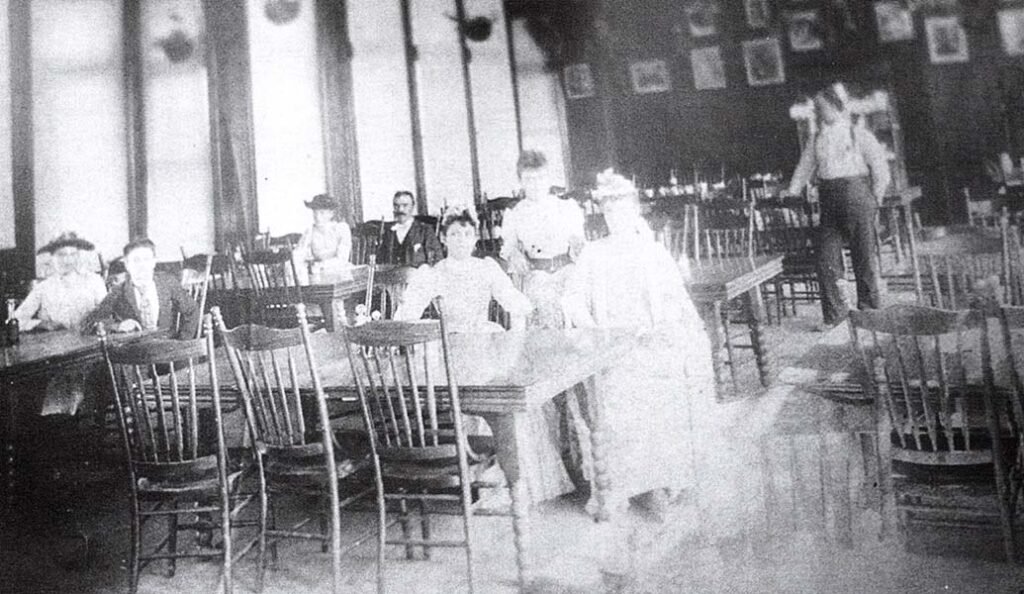
Finally, on August 6,1886, John Elitch opened his Elitch Palace Dining Room, located at 1541 Arapahoe Street. It was described as “the finest and most complete restadrant between Chicago and San Francisco, and equal to the finest in any of the larger cities.” It was lavishly decorated and attracted star performers who were appearing at the Tabor Grand Opera House, as well as newspaper editors, politicians and other Denver society leaders. The dining room was the largest in Denver, comfortably seating two hundred persons.
While in Denver, John Elitch became active in civic affairs. Being devoted to
athletics, he was one of the founders of the Denver Athletic Club, which took the
old Baptist Church at 18th and Curtis Streets as its clubhouse and gymnasium.
[Borrillo, Theodore A. Denver’s Historic Elitch Theatre: A nostalgic journey, 2012.]
In 1887, John and Mary purchased the 16-acre Chilcott Farm in the town of Highlands, five miles from the heart of Denver, for the purpose of raising vegetables and small fruits for the restaurant.
The town of Highlands began as an elite suburb of the unsavory Denver in 1875. Highlands “prided itself on its clear air, beautiful gardens and tree-lined streets and, in particular, its high moral standards.” Denver first tried to annex the town in the 1880s, but the people voted it down, not wanting it to become part of the “dirt}’, crowded, smoggy, crime-ridden, sinful city of Denver.” Ultimately, the financial state of the Highlands caused it to give in. The lack of an adequate tax base, a treasury impacted by the Silver Panic of 1893 and needed infrastructure investments left the town with little choice. Finally, on June 22,1896, the population of 8,000 voted to annex the town to Denver, with a promise from the city to facilitate transportation between the Highlands and Denver.
In 1888, John Elitch sold his Palace Dining Room. The original name of the restaurant was retained until 1890, when it was renamed the Tortoni Dining Parlors, or “Tortoni” for short. The “Tortoni” established itself as one of the finest establishments of its kind in the West. Like John Elitch’s restaurant, it attracted patrons from all walks of life, but especially noteworthy was a group known as the “Sacred 36,” who were classified as “The Smart Set” among the “Who’s Who in Denver Society.” Upstairs were dining rooms “where men of wealth often met, and deals involving millions were consummated. Political campaigns were planned behind locked doors.” Denver’s “Newspaper Alley” was close to Tortoni’s back door, so the restaurant became a favorite gathering place for newspaper men, journalists and writers of the day, including Gene Fowler and Eugene Field. The restaurant continued to operate until December 31, 1915, its 30th year.
[Borrillo, Theodore A. Denver’s Historic Elitch Theatre: A nostalgic journey, 2012.]
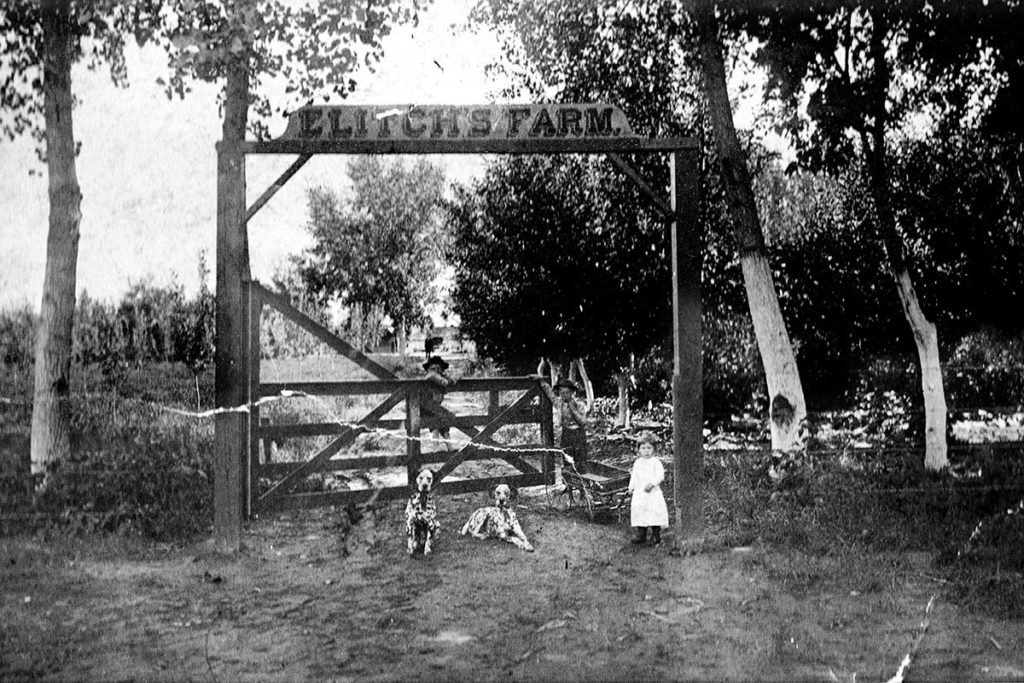
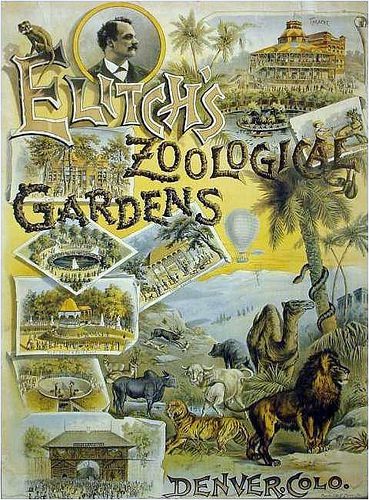
On May 1, 1890, the scheduled opening of the Elitch Zoological Gardens and Amusement Park was chilled by showers that threatened to dampen the spirits of all who came. Notwithstanding this, a large crowd attended the opening of the park.
A short time prior to the opening day celebration, city officials had installed and opened a steam train line from downtown Denver to the Gardens. The line began at the end of the old cable system at Thirteenth and Galapago Streets and ran to Thirty-eight and Tennyson Streets.
Mary Elitch vividly described the event as follows:
When the momentous day of opening arrived, I was filled with grief and disappointment, for rain was falling. Mr. Elitch was nearly as sorrowful as I, for we had made great preparations for the opening and it seemed doomed to dismal failure. Looking back through the vista of years, I am sure my sorrow was for him far more than for myself. I remember I prayed very fervently for a cessation of those May showers. As we stood in our doorway, trying to encourage each other, a horseman dashed up to the gates. Excitedly hailing Mr. Elitch, he announced that all of Denver was moving over to Elitch; that the train, packed to capacity, was laboring up the hill from the river; that coaches, carriages, delivery wagons, farm wagons, people on bicycles and people afoot were headed for our opening. We then realized that Denver was ready for what we had to offer, and her people cared not for showers; but even as we bustled about in last-minute excitement, the glorious sun broke through the clouds.
The rains ceased suddenly as the crowds neared the Gardens. Then as Wolfe Londoner, Mayor of Denver, turned the key in the garden gates and flung them wide, the Elitch Zoological Gardens and Amusement Park was officially open. The great crowd swept into the place like a tidal wave, and the celebration began.
[Borrillo, Theodore A. Denver’s Historic Elitch Theatre: A nostalgic journey, 2012.]